Catholic leader calls for an end to “business as usual”

Pope Francis declares global capitalism the “new tyranny”

The Pope wants his Church to be a voice for the poor – as he himself speaks out against economic ideologies that promote “the absolute autonomy of the marketplace” and reject the right of nations to protect people from exploitation by multinational corporations – but he needs our help.  Pope Francis decries global capitalism as a deadly “new tyranny” which imposes its own rules on the poor and powerless.

“Just as the commandment ‘Thou shalt not kill’ sets a clear limit in order to safeguard the value of human life, today we also have to say ‘Thou shalt not’ to an economy of exclusion and inequality. Such an economy kills.”

Pope Francis in “The Joy of the Gospel”  (paragraph 53)

NOTE:  I’ve included some “Pope tweets” in this blog.  Pope Francis gets five to twenty thousand retweets for each post like the one below. Follow him here!

Inequality is not inevitable, but rather the result of economic institutions designed by Continue reading Catholic leader calls for an end to “business as usual”

American Nuns deal with “power-over” Vatican hierarchy in a productive way

I was impressed while reading a story on the response of the American Catholic Nuns to an investigation and subsequent rebuke by the (all male) leadership of the Church.  If you don’t know the background to this story, the short version is that the Leadership Conference of Women Religious (representing most of the American Sisters) were accused of “undermining the Church” and instructed to reform their ways in order to come in line with the accepted teaching of the Roman Catholic Church as determined by Congregation of the Doctrine of the Faith (which interestingly was established in 1542 as the Congregation for Universal Inquisition).

The U.S. Sisters were accused of radical feminist themes that were deemed Continue reading American Nuns deal with “power-over” Vatican hierarchy in a productive way

Walmart’s policies are the cause not the solution to poverty

Walmart, the largest grocery store in the world, is often presented as a solution to poverty because of its low prices.  There is a reason for those low prices however and it is because they put ever-increasing pressure on suppliers (including those that supply food) to drive down their costs.  This drives down wages, both for the Associates who work in the stores as well as all across the manufacturing and food production chain.

Walmart is the major player in the “race to the bottom” which keeps full-time employees in poverty.  Other retailers are forced to follow in their footsteps.  When we shop locally and pay a few cents more for our food, we invest in a better quality of life for all.  However, since less than 1% of the food sold in the U.S. is produced and sold locally, this won’t be enough.  We need to require fair working conditions for all workers.  Walmart’s death grip on groceries is making life worse for millions of people!

You can help!

The following is a call for action from the Food Chain Workers Alliance.  We need to recognize that food is cheap in the U.S. because we allow people to be exploited.  When we shop at Walmart (and other “big box” stores for food) we participate and benefit from this exploitative system.

Food workers are particularly vulnerable because of their lack of political voice.  When workers protest to unfair conditions, they are punished.

PLEASE SIGN THE STATEMENT LINKED BELOW!

——————————————————————————

Stand with Wal-Mart Strikers
on June 4th! 

Walmart employees will be striking in key locations across the country to protest Walmart’s illegal retaliation against Associates who have spoken up about inequality and have struck. Associates have been calling for Walmart wages to be raised to $25,000. Faith communities, union members, community groups, allied groups and students will be taking action in solidarity with Associates who are standing up against inequality. These actions will be happening at stores across the country and online.

You can support by signing onto FCWA’s Solidarity Statement here. Please sign onto the statement by Tuesday June 3!  You can also participate in a local action in your city or state. To find a local action click here.

To find out more about the campaign and actions on June 4 click here.

===========================================================

Check out our Sustainable Food and Farming Bachelor of Sciences degree program and our Online Certificate Program at the University of Massachusetts to prepare yourself to work on issues like this.

BIG FOOD wins – we lose

Where does our food come from in the U.S?  BIG FOOD!

I’ve been writing about the “battle” between the Industrial Food System (big food) and the sustainable, local alternative for years.  This post was triggered by a new (and very well-researched) book titled “Foodopoly: the battle over the future of food and farming in America.”  It’s a pretty good survey of the problems with “big food.”  I’ve presented a few facts from this book below.

As I talk with many of my friends who grow food and sell at the local farmers market or our food coop, I’m reminded that this “battle” is hardly a fair fight.  Government policies over the past 60 years have made the playing field tilt dramatically in favor of the Industrial Food System (defined as consolidated, integrated and mechanized).

The fact that there is a resurgence in local food is a testimony to the perseverance of people who dare to dream and work for a better quality of life.  But before we celebrate the growth of local food too much, lets look at some numbers!

  • In 2008, direct sales of food from farmers to consumers hit a high of $4.8 billion
  • Total sales in grocery stores was approximately $1.23 trillion that same year
  • Local sales represents less than 0.5% of the the money spent on food in the U.S.

So, what about this “battle”?  It seems like it is already lost!  BIG FOOD won….

A few more facts:

  • Americans spend 90% of our food budget on processed food
  • We eat half of our meals and snacks away from home
  • One of every three dollars spent on groceries in the U.S. goes to Walmart
  • For every $19 bucket of Kentucky Fried Chicken sold, the farmer makes 25 cents

Everything about the Industrial Food System stinks (except for the retail price of food).  Americans spend less than 10% of our annual income on food because our food system has been industrialized – consolidated, integrated, and mechanized.  We have traded the potential for safe wholesome food, good local jobs, quality of life for all, and vibrant communities for cheap food.  And this tradeoff won’t last.  As energy prices go up so will the price of food, since the industrial system is built on cheap oil.

My response to this crisis has always been to “buy local” and invest in a better world.  In fact, my last blog was about the International Year of the Family Farm.  However the authors of Foodopoly have me convinced that “we can’t shop our way out of this mess.”  Policy changes are needed to encourage the growth of family-managed, local farms, but where do we begin?

Well, maybe we start by acknowledging the positive and negative consequences of industrializing the food system.  Next, perhaps we begin to feel sad.  But eventually we’ll need to find a source of motivation to begin to  “join the battle.”   I’ll end with this clip from the classic film Network as a possible source of motivation.

And then take an action!

Here are some suggestions.

I’d love to hear from you in the comments box below – especially if you disagree!

===========================================================

Please check out my Just Food Now Resource Page and see our Sustainable Food and Farming Bachelor of Sciences degree program and our Online Certificate Program at the University of Massachusetts.


Will the International Year of Family Farming slow the “cancerous” growth of industrial farming?

The 66th session of the General Assembly of the United Nations, declared 2014 to be the International Year of Family Farming” (IYFF).  Family Farming, according to the U.N., is the dominant form of agriculture throughout the world with over 500 million family farms.  These farms range from small and medium size holdings, and include peasants, indigenous peoples, traditional communities, and pastoralists.

The U.N. claims that family farmers should continue to be an important part of the solution to free the world from poverty and hunger. If this is to be the case, real policy changes will be needed to stop the multinational investors from continuing to acquire large tracks of land in both developed and developing nations.  A recent report titled “Land is Life” by La via Campesina documents the struggles of farming families to retain access to land in the face of escalating “land grabs” by the multinationals. According to this report…

“Land grabbing re-emerged during the 2007-2008 global food crisis, which pushed an additional 115 million people into hunger, leading to a total of almost one billion suffering from hunger by the end of 2008.  Today, global food prices remain high and volatile, particularly in developing countries. National ‘offshoring’ for land and food production, increased speculation in food markets, the ‘meatification’ of diets and the push for agrofuels are major trends that are fuellng the global land grab.”

Land speculation by corporate investors drive land values up and are seen as potentially profitable in a world where food will be in increasingly short supply.  This benefits both the investors and the industrial farms that will grow food in place of millions of small family farms.

But aren’t large, efficient farms the solution to hunger?

The multinational agribusiness and investment sector justifies the purchase of land in developing countries with reports stating that the only way to feed the world is through industrial scale, chemically-intensive and corporately-controlled farming operations.  The threat of escalating world population and increased consumption of meat in India and China are used as a rationale for putting peasants off land they have farmed for centuries.  Peasant agriculture and family farms are framed as inefficient and non-productive from a business perspective.

Nevertheless, the U.N. calculates that over 70 percent of food insecure peoples live in rural areas of Asia, Latin America, Africa and the Near East.  Putting these people off their land to satisfy the corporate demand for cheap, raw foodstuffs to feed the industrial production of processed foods and biofuels will do little to alleviate global hunger.  Concentrating production in the hands of fewer and fewer multinationals will only make the entire planet more vulnerable to crisis.  Seemingly, the government of Australia recognized this trend was not in their national self-interest when they blocked the purchase of GrainCorp by Archer, Daniels Midland Co.

The self-proclaimed “supermarket to the world” expressed their disappointment with the following statement from CEO Deborah Woertz; “we are confident that our acquisition of GrainCorp would have created value for shareholders of ADM and GrainCorp.”  The proposed acquisition was not about growing more food.

In fact, the corporate food business has never been about feeding hungry people.  Despite wave after wave of promises to “feed the world” from the corporations that seek to control the global food supply, the worth of industrial farming is measured only in return on investment. The business of growing food has been financialized to the point that the health of rural communities, the quality of rivers and streams, public health and food safety have been sacrificed to maximize corporate profits.  Deregulation of government protection of the environment, small businesses, and public health, especially in the United States, has reached a radical extreme.

There is no reason to believe that continued industrialization of farming will ever “feed the world.”  Agribusiness is more of a cause than a solution to world hunger, as industrialization accelerates poverty and hunger among the displaced peoples of developing nations.  Perhaps it is time to balance industrialization with an effort to help family farmers feed the world.  (NOTE:  this is not to say that large farms should not be part of the solution to world hunger, but they would have to be regulated to prevent harm to rural communities, public health, food safety and environmental quality).

In addition to efforts to stop the “cancerous” growth of unregulated corporate farms, a supportive policy environment for family farmers might allow them to deploy their productivity potential.  A 2010 report from La via Campesina claims that indeed sustainable family farms can make a major contribution to ending world hunger.  By supporting rather than displacing farmers on the landscape, the world might create a more resilient food production system, less vulnerable to crisis.  The U.N. statement of support for Family Farming claims that:

“Facilitating access to land, water and other natural resources and implementing specific public policies for family farmers (credit, technical assistance, insurance, market access, public purchases, appropriate technologies) are key components for increasing agricultural productivity, eradicating poverty and achieving world food security”

Nevertheless, it is difficult to imagine a policy shift so extreme that the World Trade Organization (WTO) would agree to an agricultural policy that prioritizes local and regional trade (which supports family farming) at the expense of the global import/export business.  To date, any policy that threatens global trade (such as environmental protection) has been sacrificed to the financial bottom line of the multinationals.

What about family farms in the United States?

In spite of the support for this effort by the National Farmers Union in the U.S., the track record of U.S. policy has been anti-farmer for the past 60 years.  Wenonah Hauter writes in Foodopoly, “After World War II, farmers became the target of subtle but ruthless policies aimed at reducing their numbers, thereby creating a large and cheap labor pool.  In more recent times, federal policy has been focused on reducing the number of farms as labor has been replaced by capital and technology.” 

U.S. federal farm policy has been markedly pro agri-business and anti family farmer, in spite of the rhetoric of U.S.D.A. administrators.  While this policy has resulted in cheap food (consumers in the U.S. expend less than 10% of their income on average toward food) the effect on all other aspects of society such as public health, environmental quality, rural community vitality, and the economic viability of the family farm has been decidedly negative.

The business of growing and distributing food in the U.S. is owned by only a few major corporations.  This is not the result of “free trade” and fair competition but rather public policy.  Consolidation of the food industry is supported by the same politicians that benefit from corporate contributions to election campaigns.

It will take a remarkable turn around in public policy in the U.S. if we intend to participate in the celebration that is the International Year of Family Farming! 

===========================================================

Please check out my Just Food Now Resource Page and see our Sustainable Food and Farming Bachelor of Sciences program at the University of Massachusetts.  Go here for more of my World.edu posts.

Pondering the future of work and the role of higher education

My spring classes have begun at the University of Massachusetts and I’ve been thinking a lot about my responsibility as an educator to help the graduating students in our program find good work.

Our Sustainable Food and Farming major in the UMass Stockbridge School of Agriculture has grown significantly over the past 10 years (from just 5 students in 2003 to almost 100 today).  While this doesn’t make it a large program at UMass, it makes it one of the largest sustainable agriculture programs in the U.S.

This dramatic increase in interest in sustainable food and farming education is being driven by “external” forces like the a growing local food culture coupled with a depressed national economy, as well as “internal” forces like the passion and commitment young people have to find real and meaningful work.

While most of my colleagues have celebrated this rapid growth in our program, a few have raise the concern that this many students may not be able to find well-paying jobs upon graduation.  As their adviser, I take this concern seriously and try to point students  toward good opportunities in the working world.  Perhaps just as important however, I encourage them to reflect upon the difference between “finding a job” and pursing their “calling.”

Good Work

As Matthew Fox points out in his book “The Reinvention of Work“, there is a big difference between a  “job” and “good work.”  The great British economist, E.F. Schumacher (most famous for his 1973 landmark book Small is Beautiful), wrote a less-known book called Good Work about this topic. According to Schumacher, good work should...

  1.     …provide the worker with a living (food, clothing, housing)
  2.     …enable the worker to perfect their natural gifts & abilities
  3.     …allow the worker to serve and work with other people

A “job” can “provide a living (food, clothing, housing)” but good work is needed for us to be fully human.  In an interview, Matthew Fox stated “a job is something we do to get a paycheck and pay our bills. Jobs are legitimate, at times, but work is why we are here in the universe. Work is something we feel called to do, it is that which speaks to our hearts in terms of joy and commitment.

Those of us for whom our job is also our calling might celebrate Robert Frost’s words in Two Tramps in Mudtime:

My object in living is to unite
My avocation and my vocation
As my two eyes make one in sight.

How many us can claim that our avocation (that which we love) and our vocation (that which “pays the bills”) are truly as two eyes made one in sight?

Asking the Right Questions about Work

As important as finding a job is after college, it also seems to me that the emphasis on preparing students for a job results in an impoverished understanding of a college education.  At a recent “majors fair” I was saddened by the number of students whose first question to me was “so how much money will I make when I graduate from this major?”  Wrong question!  While a job and salary are obviously important it should not be the first question a student asks about a potential career.

Matthew Fox reminds us that everyone of us has a calling and he explores several questions that may help us discover the reason we are here on this earth at this time.  He asks us to consider these questions:

What are our talents? What is the pain in the world that speaks to us that we want to respond to? What gifts do we have, whether material goods or power to influence? What gifts do we have to make a difference? We are all living under this sword of the collapse of the ecosystem and what are we doing about it? Are we planting trees, are we working in the media to awaken consciousness, are we working to preserve the species that are disappearing or the soil or the forests? Are we cutting back on our addiction to meat, changing our eating habits, using less land, water and grain for our eating habits? Are we being responsible, and how does it come through in our work and in our job?

Of course, I can see some of my colleagues roll their eyes as they recite their job-focused mantra “yes, but it won’t matter if they can’t find a job! 

Okay, so lets think about the jobs of the future?  What will they look like?  And what can we do to help prepare students for a job?

The Future of Work

The “smart” people tell us that the world is changing fast in response to advances in technology and continuing commoditization of work, resulting in an ever growing gulf between the “haves and the have-nots.”  Futurist Ross Dawson reminds us that …unless your skills are world-class, you are a commodity.”  And the trend for the price of a commodity (including labor) is inexorably downward. Salaries of the highest wage earners continue to rise while those of the lowest continue to fall.
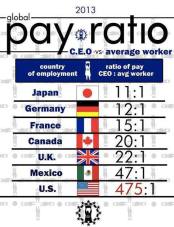
Among the industrial nations, the disparity between the salaries of upper management and workers is particularly onerous in the U.S.  Even a college education may not be enough to provide a graduate with financial security in a society of growing inequity.  Preparing students for an entry level job, without helping them also discover their calling and learn how to adjust and adapt to a rapidly changing world, simply prepares young people for being a commodity.  We owe it to our students to do more than prepare them for being “cogs in a corporate machine.”

As depressing as this may sound, Dawson and other futurists project even more challenging times ahead.  We need to ask ourselves, in these tenuous times how do university educators help prepare students to be successful in a new and largely unpredictable world?

A Few Suggestions

1. Well the first thing we need to do is to define success in more than financial terms.  Living simply, being useful to others, being part of a healthy family and community MUST be valued as legitimate forms of success.

2. Next, students (and others) need clarify their personal calling (the confluence of a vocation and an avocation).  If jobs are not secure, preparing for a job (even a well-paying job) that may exist today and be gone tomorrow is a bad plan.

3. Developing practical skills (like being able to fix a small engine, grow food, build a bike-carrier, graft a fruit tree, find relevant information on a smart phone or tablet, build a solar oven, or make a cup from clay), community-building skills (like knowing how to build coalitions of people who hold common values to work together), and system thinking skills (like knowing how to uncover root causes and shift the structure of complex systems), might be the most useful prerequisites for success in a rapidly changing world.

4. Finally, everyone must learn to learn how to learn so they are ready to adapt to rapidly changing conditions. Too much of higher education is about remembering facts.  Students graduate college with the dual skills of knowing how to take tests and how to write term papers, skills that are valued no where outside the university.  Demonstrating they are “smart” (by getting good grades) is less important when many of the facts they have memorized for their exams are easily accessible on their smart phones. Blooms hierarchy of learning (below_ reminds us that “remembering” is the low end of learning.
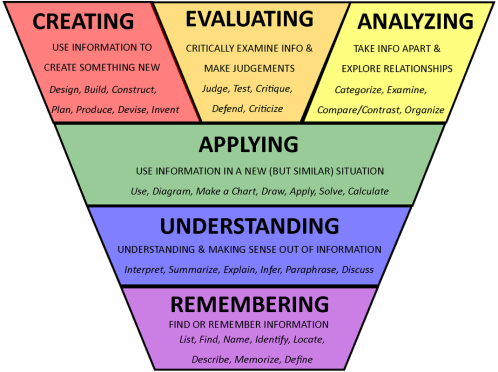
Education for the future

The Sustainable Food and Farming major in the UMass Stockbridge School of Agriculture encourages students to explore experiential learning opportunities on farms, in markets and cooperative stores, non-profit advocacy organizations, and teaching situations while in college.

In addition, there are many opportunities such as the UMass Real Food Challenge to earn college credit by working with other students to gain real-world experience while earning a Bachelor of Sciences degree in our program.

Education for the future needs to be less focused on memorizing facts and more on applying those facts to solve problems.  Information is relevant but if necessary facts can be looked up on a smart phone, it is not worthy of higher education.

Education for the future needs to be more experiential, giving students the opportunity to “create, evaluate, and analyze” in real world situations.  A university education should be a practice field where it is safe to “fail.”  Students should be put into situations where they can learn how to learn how to learn so they are ready to adapt to a rapidly world.

Anything less is a failure of imagination.

ENDNOTE:  I”m curious to learn about your own experience of higher education.  Have you had the opportunity to “practice” in a real world situation while in college?  Please share your stories in the comments box below.

===========================================================

See the  Sustainable Food and Farming program at the University of Massachusetts for information on our Bachelor of Sciences degree.

 

We must choose either “cheap” food or a better quality of life (for all)

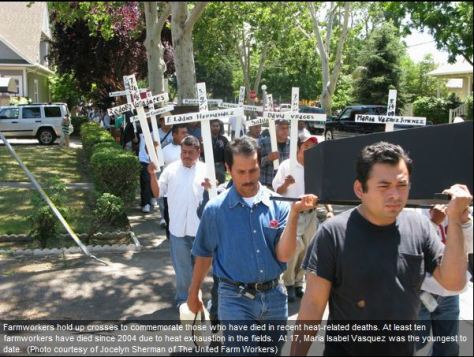
Maria Isabel Vasquez Jimenez was tying grape vines at a farm in Central California, when the temperature soared well above 95 degrees. Only a few days in the country, this undocumented field worker, who didn’t have easy access to water, shade or the work breaks required by law, passed out from the heat and died two days later. (More).

Maria was 17 years old. The Center for Disease Control reports that heat-related deaths of farm workers are on the rise in the U.S. This deadly trend is unfortunately one of the costs of cheap food.

Our industrialized food system consisting of mega-farms, long-distance shipping and big box-stores has driven down the retail price of food to the point that Americans, on average, expend about 9 percent of their annual income on food. The industrial food system in the U.S. produces relatively “cheap” food, but at a cost. Fortunately, in some parts of the U.S., we can partially opt out of this exploitative and costly system.

In the Pioneer Valley of Western Massachusetts, where I live, the locally grown vegetables are generally of higher quality than anything shipped from a distance.  We can enjoy the freshness and flavor of the food available at our local farmers’ markets, farm stands, food coops and some regional supermarkets. Yet most experts agree that less than 10 percent of the produce purchased in our region is grown locally.

I suspect the reason that 90 percent of the consumers in my (fairly progressive) region of the country don’t regularly buy local food is due to its perceived higher price and the convenience of shopping at major supermarkets.

Busy people treat food shopping as just another task, rather than a pleasurable social experience.  Studies indicate that we have 10 times more conversations when we shop at the farmers’ market than at the supermarket.  I know when I stop in at the new All Things Local Cooperative Market in downtown Amherst, I always bump into friends and neighbors.

Shopping locally isn’t an “efficient” use of time in my task-driven life – which is one of the reasons I make the effort slow down and shop at the farmers market or local coop.  For me, buying locally is an investment in a higher quality of life (for all).

Some regional supermarkets do try to offer local products. The Big Y in Western Massachusetts, for example, is a family-owned business and a major supporter of the UMass Student Farm, which grows organic vegetables for sale locally. When we do choose to shop at supermarkets, we can support local farmers by asking specifically for locally grown products.

And what about price? How often have we heard the statement that local food costs more?

Certainly, local beef, pork and chicken cost more than meat raised in a factory farm. You just can’t beat the efficiency and scale of the industrial animal factory for low price. The fact that local meat products are generally produced with less stress on the animals may not be worth the higher price to some of us. Of course, if we were concerned about our own health, the health of our community and the health of the environment, we might choose to eat less meat altogether and when we do we can buy local. This would be an investment in a higher quality of life for ourselves, for local farm families, and for the animals we consume.

On the other hand, there is little difference in price between local and shipped vegetables, especially during our growing season.

But “cost” includes more than “price.” The industrial food system that produces cheap food does so at the expense of the workers in the food system, on farms, in factories, shipping terminals, big box-stores, and the fast-food restaurants serving the food. These workers earn near minimum wage. A federal minimum wage law that leaves families in poverty is part of the cost of cheap food.  Maria Isabel Vasquez Jimenez’s death is also part of the cost of cheap food.

When we consider the quality of life we enjoy in those regions like my own where local food is plentiful, we might also wonder about the quality of life of those who are working to produce, ship and sell cheap food. When we buy food shipped from long distances, we say “yes” to an exploitative system designed primarily to maximize financial returns of corporate shareholders – at the expense of others.

It is true that relocalization of the food system may result in higher (but fairer) food prices overall. At the same time buying local food will create local jobs and build community.

When you buy your food locally you are making an investment in a higher quality of life (for all).  I think this is an investment we can’t afford not to make.

===========================================================

Please check out my Just Food Now Resource Page and see our Sustainable Food and Farming Bachelor of Sciences program at the University of Massachusetts.  Go here for more of my World.edu posts.

NOTE: this post  was adapted from an editorial I wrote for the Pioneer Valley Relocalization Project and was posted originally here.

We must choose either "cheap" food or a better quality of life (for all)

Maria Isabel Vasquez Jimenez was tying grape vines at a farm in Central California, when the temperature soared well above 95 degrees. Only a few days in the country, this undocumented field worker, who didn’t have easy access to water, shade or the work breaks required by law, passed out from the heat and died two days later. (More).

Maria was 17 years old. The Center for Disease Control reports that heat-related deaths of farm workers are on the rise in the U.S. This deadly trend is unfortunately one of the costs of cheap food.

Our industrialized food system consisting of mega-farms, long-distance shipping and big box-stores has driven down the retail price of food to the point that Americans, on average, expend about 9 percent of their annual income on food. The industrial food system in the U.S. produces relatively “cheap” food, but at a cost. Fortunately, in some parts of the U.S., we can partially opt out of this exploitative and costly system.

In the Pioneer Valley of Western Massachusetts, where I live, the locally grown vegetables are generally of higher quality than anything shipped from a distance.  We can enjoy the freshness and flavor of the food available at our local farmers’ markets, farm stands, food coops and some regional supermarkets. Yet most experts agree that less than 10 percent of the produce purchased in our region is grown locally.

I suspect the reason that 90 percent of the consumers in my (fairly progressive) region of the country don’t regularly buy local food is due to its perceived higher price and the convenience of shopping at major supermarkets.

Busy people treat food shopping as just another task, rather than a pleasurable social experience.  Studies indicate that we have 10 times more conversations when we shop at the farmers’ market than at the supermarket.  I know when I stop in at the All Things Local Cooperative Market in downtown Amherst, I always bump into friends and neighbors.

Shopping locally isn’t an “efficient” use of time in my task-driven life – which is one of the reasons I make the effort slow down and shop at the farmers market or local coop.  For me, buying locally is an investment in a higher quality of life (for all).

Some regional supermarkets do try to offer local products. The Big Y in Western Massachusetts, for example, is a family-owned business and a major supporter of the UMass Student Farm, which grows organic vegetables for sale locally. When we do choose to shop at supermarkets, we can support local farmers by asking specifically for locally grown products.

And what about price? How often have we heard the statement that local food costs more?

Certainly, local beef, pork and chicken cost more than meat raised in a factory farm. You just can’t beat the efficiency and scale of the industrial animal factory for low price. The fact that local meat products are generally produced with less stress on the animals may not be worth the higher price to some of us. Of course, if we were concerned about our own health, the health of our community and the health of the environment, we might choose to eat less meat altogether and when we do we can buy local. This would be an investment in a higher quality of life for ourselves, for local farm families, and for the animals we consume.

On the other hand, there is little difference in price between local and shipped vegetables, especially during our growing season.

But “cost” includes more than “price.” The industrial food system that produces cheap food does so at the expense of the workers in the food system, on farms, in factories, shipping terminals, big box-stores, and the fast-food restaurants serving the food. These workers earn near minimum wage. A federal minimum wage law that leaves families in poverty is part of the cost of cheap food.  Maria Isabel Vasquez Jimenez’s death is also part of the cost of cheap food.

When we consider the quality of life we enjoy in those regions like my own where local food is plentiful, we might also wonder about the quality of life of those who are working to produce, ship and sell cheap food. When we buy food shipped from long distances, we say “yes” to an exploitative system designed primarily to maximize financial returns of corporate shareholders – at the expense of others.

It is true that relocalization of the food system may result in higher (but fairer) food prices overall. At the same time buying local food will create local jobs and build community.

When you buy your food locally you are making an investment in a higher quality of life (for all).  I think this is an investment we can’t afford not to make.

===========================================================

Please check out my Just Food Now Resource Page and see our Sustainable Food and Farming Bachelor of Sciences program at the University of Massachusetts.

NOTE: this post  was adapted from an editorial I wrote for the Pioneer Valley Relocalization Project and was posted originally here.

Its Food Day in the U.S. on October 24!

Food Day in the U.S. is a nationwide celebration of healthy, affordable, and sustainably produced food and a grassroots campaign for better food policies. It builds all year long and culminates on October 24 (NOTE: World Food Day is celebrated on October 16, the day the Food and Agricultural Organization was founded in 1945).

Learn more about Food Day in the video below.

Why Food Day?

The typical American diet is contributing to obesity, diabetes, heart disease, and other health problems. Those problems cost Americans more than $150 billion per year. Plus, a meat-heavy diet takes a terrible toll on the environment.

Eating Real can save your own health and put our food system on a more humane, sustainable path. With America’s resources, there’s no excuse for hunger, low wages for food and farm workers, or inhumane conditions for farm animals.

Food Day’s national priorities address overarching concerns within the food system and provide common ground for building the food movement. Food Day aims to:

  • Promote safer, healthier diets: The foods we eat should promote, not undermine, our good health. Yet, every year we spend more than $150 billion on obesity-related health care costs, plus another $73 billion in reduced productivity.
  • Support sustainable and organic farms: Currently, sustainable farms receive little to no federal support and often lack market access to keep them competitive. Meanwhile, the largest 10 percent of industrialized farms—which contribute to poor health and severe environmental degradation—receive 75 percent of all farm subsidies.
  • Reduce hunger: Currently, around 50 million Americans are considered “food insecure”, or near hunger, and Supplemental Nutrition Assistance Program (SNAP, formerly food stamps) participation is at an all-time high. SNAP is vital to reducing hunger, but the program’s budget is under constant attack while federal measures to increase food access are minimal.
  • Reform factory farms to protect the environment and farm animals: Today, most farm animals are confined in “factory farms”—sometimes containing as many as 50,000-100,000 cattle, hens, or pigs. These practices result in needless animal abuse and illness, environmental degradation, and harm the people who live in and around those facilities.
  • Support fair working conditions for food and farm workers: 20 million workers throughout the U.S. food system harvest, process, ship, sell, cook, and serve the food we eat every day. And yet, many farmworkers earn well below poverty levels while the tipped minimum wage for restaurant servers has remained at $2.13 per hour for the last 21 years.

For more information Sign up for weekly email updates, and join the conversation about Food Day issues on Facebook, Twitter, and Pinterest.

Our Food Day Celebration in Amherst, MA

Grow Food Amherst has organized a community potluck on Food Day, October 24.  This local organization has invited all members of the community to gather for a potluck meal to celebrate National Food Day in the Large Activity Room of the Bangs Community Center.  Everyone is asked to bring a dish to share prepared with items from their garden, CSA, local farm or local food store (as much as possible), their own plate and utensils, and an index card with a list of ingredients for those with food allergies.

The group will also have a photo board on hand so that people may share photos of their gardens or prepared dishes.

“The main idea behind Food Day is to raise awareness of the importance of eating fresh, local and healthy food” said Amherst’s Sustainability Coordinator, Stephanie Ciccarello.

To sign up for the potluck, go to: Sign up here!

==========================================================

This post was created with text from the Food Day web page.  I’d appreciate it if you would share this post with your friends.  And for more ideas, videos and challenges, please join my Facebook Group; Just Food Now.   Go here for more of my World.edu posts.  To get a college degree see: UMass Sustainable Food and Farming.

Your life is a “story within a larger story”

When I introduce my Agricultural Systems Thinking class  to the concept of hierarchy, I often use our own lives as a metaphor for “subsystems within larger systems.”  In this blog, I will try to examine the relationship of subsystems within a natural systems hierarchy (or holarchy) to the “system above”, which provides the “system below” with meaning.  But first, lets  examine the title of the blog “your life is a story within stories.”  I borrowed this metaphor from a wonderful systems thinker, Michael Dowd, who wrote ”

“Each of us is a story within stories. My daughter’s life story is part of both my story and her mother’s story. The story of our family is likewise part of other stories larger than our own: the story of our town, our state, our nation, Western civilization, humanity, planet Earth, and the story of the Universe itself. Each of us is a story within stories within stories.

“There is a dynamic relationship between every story, the larger stories it is part of, and the smaller stories that are a part of it. Larger stories influence and add meaning to the stories that are nestled within them. For example, if my wife and I were to move across the country, my daughter’s story would be affected. Similarly, if my nation goes through a severe economic depression, experiences prolonged drought, or undergoes a major spiritual awakening, my community’s story, my story, and my daughter’s story will each be affected. The destiny of every story is affected by the larger stories of which it is a part.”

Get it?

As if the universe was trying to affirm this message, I opened a little book this morning which I had picked up at the library yesterday and read the first line in Hunger Mountain by David Hinton.  He wrote; “things are themselves only as they belong to something more than themselves: I to we, we to earth, earth to planet and stars…”

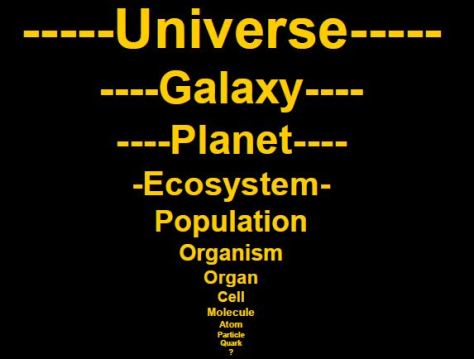
Hmmmmmm…..  sounds an awful lot like the image from my earlier blog.

I find meaning and purpose in my life by being useful to a system (story) larger than myself, in which my life is embedded.  This mental model of relationships helps me to know who I am and why I am here.  And it helps me choose how to invest my limited time on this planet.

Addictions are a coping mechanism

I sometimes wonder if the many addictions that humans seem to, …. well, become addicted to, result from a life focused on the little “myself” without a strong connection to the larger story.  And of course the addictions are many:

  • drugs (prescribed and illegal)
  • alcohol (at least its legal)
  • recreational sex (friends with benefits in today’s common lingo)
  • passive consumption of violent sports (football, hockey…..)
  • shopping (the number one addiction in America)

Of course, when not taken to the extreme these are normal human behaviors.  But we seem to be addicted to “the extreme.”  I wonder if these common addictions are coping mechanisms for a life lived without a sense of purpose, or a connection to that system (story) larger than the little “myself.”

I believe we find meaning and purpose in “larger” systems (in which our lives are embedded) because indeed, we are an intimate part of those larger natural systems.  This is not necessarily true however, for a human-constructed hierarchy.

We may not want to invest our lives in the next higher system in a human constructed hierarchy.  We may simply choose to “do our job” and take our paycheck home.  Many people today, seem to be willing to settle for this sort of life.  This seems a little sad to me.  I”m reminded of a Robert Frost poem, Two Tramps at Mud Time, where he writes;

My object in living is to unite
My avocation and my vocation.

I wonder how many of us are blessed with a vocation (that which we need to do) that is also an avocation (that which we love).

Frost continues:

Only where love and need are one,
And the work is play for mortal stakes,
Is the deed ever really done
For heaven and the future’s sakes.

When we live within a human-constructed hierarchy, we may not be in a position to work for “heaven and the future’s sake.”  Whereas, in a natural systems hierarchy, each subsystem is an intimate part of the next “larger” system.  We have no choice but to play for mortal stakes!  Indeed, we (the organism in the graphic below) contribute to the health (or ill health) of the human population, the larger ecosystem, the planet……

When I see myself as part of a human constructed hierarchy, I am likely to be competitive and selfish.  When I see myself as part of a natural systems hierarchy, a living system, it is in my best “self” interest to work for the good of the next larger system!

We are stores within stories

There is a visual tool that might help us picture the relationship among levels of complexity within a natural hierarchy called the Mandelbrot Set.  This is a mathematical set of points with a unique and distinctive shape.  As you look more closely at the shape however, you see the same shape repeated over and over again, seemingly infinitely.

A system in nature consists of smaller systems, upon which it depends.  Likewise the smaller systems are completely dependent on the larger system.  That is, we are stories within stories or using the Mandelbrot metaphor, common shapes within shapes.

But my family or community is a mess!

If we are not blessed with a healthy family and community (and I believe that those of us that are blessed with a healthy family or community have a special responsibiltiy to contribute to the well-being of others), still…. we ALL have a common, and powerful story.  It is The Great Story, and it is the greatest story ever told!

When we see ourselves serving a human constructed hierarchy of power and control, we may become scared and selfish.  And then the addiction that seems to dominate the national dialogue in America emerges, anger.

On the other hand, when we see ourselves as part of The Great Story of the continued evolution of the universe, we may choose to be of service to family, community, the planet, the universe, or even the divine.  When we see ourselves as something MUCH larger than the little “myself” – we may recognize our larger purpose and our obligations to other beings (both human and otherwise).

I believe we have a choice……

==========================================================

I’d appreciate it if you would share this post with your friends.  And for more ideas, videos and challenges along these lines, please join my Facebook Group; Just Food Now.   And go here for more of my World.edu posts.  Finally, for more systems thinking posts, try this link.

Systems Thinking for a More Sustaianble World

New Thought Evolutionary

Creating The Beloved Community - Together

Amadou It All

A Fascinating Fungal Fabric and a Humungous Human History

Levi Stockbridge Lessons and Legacy

What can we learn today from "Prof Stock"?

The Niche

Trusted stem cell blog & resources