Our best days in months

TO:  Our Family….

We had the best weekend in months at 123 Harlow Dr. with lots of family around, the pool is open, good news from the Colorado Gerber/Marines, it was Fathers Day, and Phyl had her energy and appetite back!

FB6935FE-BE70-4F50-B67C-E3CCA94FF15E

For the past week, she has been suffering with nausea and fatigue which we thought might have been caused by the only  ALS drug currently available, Riluzole.  After consulting with two neurologists we all agreed it was not worth the small, potential benefit from the drug.  As soon as she stopped taking it, she felt better.   She ate like a horse yesterday – without nausea… AND she woke up this morning with renewed vigor.

She said to me this morning, “life is good when you are feeling good!”  This was the cumulative effect of the weekend with our family, Brian and Belita’s good news about having their offer accepted on a house in Rhode Island, no nausea, and she was wearing her new foot brace.  She said before she put it on her back hurt, her foot dragged and she was walking really slowly.  With the brace on, her back pain went away and there was a spring in her step (literally as the brace gives her left foot lift).

She is working right now with her new Physical Therapist, who has worked with dozens of ALS and MS patients.  She will help me figure out what needs to be done to the house (eventually) like ramps, hand rails etc.  We like her – and she comes to the house!

IMG_2748

That’s the good news…. the sad news, is that Phyl’s Uncle Marty died.  Phyl and I used to visit Helen and Marty in Concord when we were both in college and they became very special people to us over the years.   When Phyl was first diagnosed with ALS we were in Eastern Mass having met with a neurologist at the Lehey ALS Clinic, who Helen and Martin recommended.  After we got the official bad news that day, Phyl knew that she needed to be close to her Aunt Helen immediately.  Both Helen and Marty were supportive, caring and concerned – and it helped her a great deal to know how much she is so loved by her Mother’s sister.

On the clinical front….. we applied to be enrolled in a trial of a new drug, AMX0035.   It is a phase two trial for safety and efficacy and will only accept 132 people (10 of them from UMass Medical in Worcester).  The good news is that it is the beginning of a “cocktail” that addresses multiple causes and both of the drugs in the cocktail have been tested for safety independently.  We spoke with the Head of Neurology at UMass Medical last week and he hopes Phyl will qualify for the trial.  The weird thing is that her symptoms might not yet be bad enough yet as she needs a definitive diagnosis of ALS.  Since the disease is developing so slowly….. we don’t know if she will be accepted.  He was hopeful to get her in the trial however.  Of course we are happy that the symptoms are developing so slowly…..

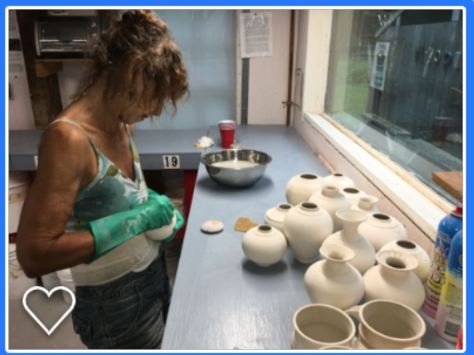
pottery

That’s my update for today and I’m glad it could be a (mostly) positive report.  I am going to help her glaze pottery this afternoon as she can’t lift the glaze containers…. so I’m becoming a potter!  We also just signed a contract to rent a house on the beach in Rhode Island (near Pt. Judith Lighthouse) for the last two weeks in August.  So, “life goes on” as my Mother says.

Love to you all…..

John/Dad


Click here for the next email in Phyl’s story

We are apart of – not a part from Mother Nature

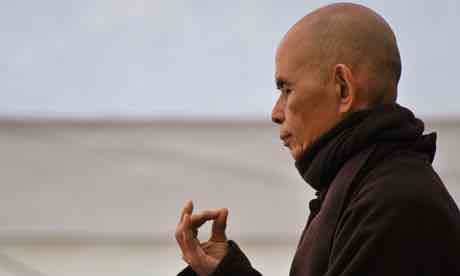
Zen-master-Thich-Nhat-Han-007
Zen master Thich Nhat Hanh says a spiritual revolution is needed if we are going to confront the environmental challenges that face us. Photograph: Plum Village

Zen master Thich Nhat Hanh has been practising meditation and mindfulness for 70 years and radiates an extraordinary sense of calm and peace. This is a man who on a fundamental level walks his talk, and whom Buddhists revere as a Bodhisattva; seeking the highest level of being in order to help others.

Ever since being caught up in the horrors of the Vietnam war, the 86-year-old monk has committed his life to reconciling conflict and in 1967 Martin Luther King nominated him for the Nobel Peace Prize, saying “his ideas for peace, if applied, would build a monument to ecumenism, to world brotherhood, to humanity.” Continue reading We are apart of – not a part from Mother Nature

A month later

IMG_2641
Healthy food from now on! 

TO:   Family and friends….

It has been a month since my last note to you about Phyl/Mom.  While we have been in touch with many of you and thankfully visited with quite a few family members this month, I wanted to bring everyone up to date on where we are at with regards to ALS treatments.  Its complicated…..

First, there are several theories on what causes ALS.  There does not seem to be one single cause for all people.  Also, the disease manifests itself in different ways for different people.  The biggest difference is where it shows up first.  There is a type of ALS called “bulbar” which starts with the throat (swallowing) and diaphragm (breathing).  This is really bad.  Fortunately, this is not our story.

The other type of ALS starts in the legs and sometime hands/arms.  Phyl has lost a lot of muscle in her left leg, some in her right leg and a bit in her left hand.  The uneven gait this produces has also created back pain.  The good news is that symptom development has been relatively slow and for most ALS patients, the rate of development seems to be pretty steady over time.  Some people have a very rapid loss of muscle control.  Again, this is not our story.

So…..  the treatments that have been developed and are in experimental stages right now address several of the potential causes.  It is likely that the causes interact with each other, and our new best friend, the head of Neurology at UMass Medical Center in Worcester, says any effective treatment is likely to be a cocktail of several drugs.   So that is what we are looking at.  The potential causes and treatments are:

1. Excess glutamic acid (glutamate).  This is a known cause for some ALS patients.  Glutamate is a normal body amino acid found in all of us.  It is exceedingly high in ALS folks and possibly a cause of motor neuron cell death.  The standard ALS drug, Riluzol, is known to reduce glutamate and also delay symptom development.  Phyl has been taking it for about a month.  She also avoids foods with glutamate (and Chinese food which still has monosodium glutamate in it even though it is no longer legal).  Riluzol is very safe and seems to have no side effects.

2. Neuroinflammation – the inflammation of neuron (nerve) cells is almost always seen in ALS patients.  The cause of inflamed motor neurons may be external toxins, so we are eating mostly organic, non-processed foods and Belita has taken away all of our toxic cleaning fluids etc.  Inflammation can also be caused by excessive free-radicals which oxidize cell components and may cause neuron death.  These can come from diet but we also produce free radicals ourselves.  She is eating foods high in anti-oxidants and also hopes to start with the new FDA approved drug, Radicava in October.  This new drug is a  free-radical scavenger and has been shown to slow symptom development in ALS patients.  The downside to this drug is that it is administered by infusion into the veins which requires a visit to a medical center – at least at first.  Over time, they may give her a port which would allow us to administer the drug at home.  It is administered every day for two weeks and then two weeks off… forever.   This assumes of course that insurance will pay!

3. Another possible cause is poor function and death of the cellular mitochondria (produces energy in the cell).  I really don’t understand the mechanism for this one but there is an experimental drug, Amylyx 35, which will be available for clinical trial in a few weeks that may help.  We have a telephone conference call scheduled on Monday to be evaluated for this trial, which includes twice daily medication (a dry powder mixed in water).   This one is a combination of two different drugs which I can’t pronounce.  Both have been shown to be safe individually and effective in slowing down disease progress.  If we are accepted into the trial (and don’t get the placebo) Phyl will be one of 132 people who will test the drugs together for the first time.  It seems to work in mice!  These drugs are thought to be neuro-protective but the mechanism isn’t clear.  Its a gamble and a hope.  The folks are UMass Medical are actually pretty excited about this one.  There are other experimental drugs but we have to do them one at a time so we are betting on Amylyx 35.

4. Another potential cause is heavy metal toxicity, but this is rare.  Phyl is being tested because of her use of pottery glazes.  It is unlikely, but the folks at UMass Medical are being really thorough.  They have done extensive blood and DNA testing (cost $9,000…. thank God for insurance).  More blood tests this week as well.

5.  There are other possible causes but no scientific evidence for any.  There are also lots of “quacks” who promise a cure.  Fortunately the ALS community is strong and communicate with each other.  There are several online forums that routinely examine all claims and tend to expose the scam artists.   The medical community is supportive of anything we want to try, as long as it does no harm and doesn’t cost us the house.   So we continue to explore….

6. One of the other potential treatments that may become available later this year would be stem cell infusions.  Our research neurologist who has seen the preliminary data on a treatment called Nurown (they create stem cells from your own bone marrow) encouraged us to get involved in the Amylyx 35 study now and not to wait for the high-tech treatment  – so we are following his advice.  Maybe later….

Phyl is getting her routine therapeutic care from the Lahey ALS Clinic in Burlington, MA.  We really liked the staff and will continue to see them every 3-4 months.   She was also examined by the head of neurology at UMass Medical, which is a treatment hospital but specializes in research.  That is where we will go for clinical trials.  Finally, we saw a Functional Medicine doc last week and are working on cleaning up her diet and taking a few supplements that are believed to support overall health (probiotics, digestive enzymes, fish oil, and some super vitamins).  Of course we also have Belita to give us guidance on how to eat healthy and we are making changes in what and how we eat.  And today we picked up our first medical marijuana treatment which may have therapeutic value for ALS but is mostly for anxiety.  This may allow her to quit the Xanax and help her sleep.

Our objective is to slow down the development of the disease.  It is unlikely that any of these steps will cause a reversal of symptoms (although a miracle will be accepted and appreciated).  She is losing functional muscles in her legs slowly.   We hope to receive a foot brace this week which will provide support for her left leg and make it easier to walk.  She also has a new Physical Therapist who she likes and will work on the back pain, that we believe is caused by an uneven gait while walking.  She is walking okay… better if she holds my hand.  We also have a rolling walker (rotavator) for use if she knows she will be on  her feat a long time.  So I think we are doing all we can.

There is a lot of research going on – so with these steps and a whole lot of prayers, I remain hopeful.  In the mean time, we are planning on spending two weeks on the beach in Rhode Island in September and hopefully a trip to Arizona in late October or early November.  If all goes well, I’d like to get to “Saint Somewhere” (warm) in February.  All of these trips will depend on the scheduling of the Radicava infusions, so who knows.

IMG_2654
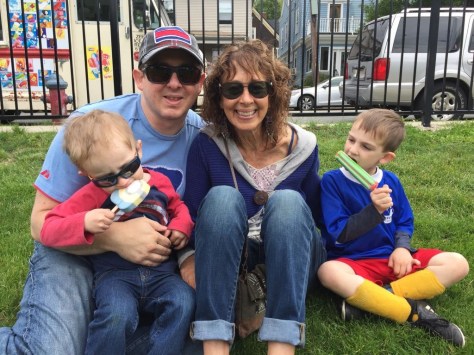
What could be better than soccer in Somerville?

This email has been much longer than I expected but I wanted you to know the whole story.  If you have questions about any of the treatments or experiments, please let me know.  I’m happy to tell you what I know…. as this study has become my life.  Well, that and keeping my wife busy and entertained.  This weekend Stuart and Gretel visited and we went to see Helen and Marty and family in Concord.  We also saw a soccer game in Somerville (Noah was great in the game of course and Colin was trouble) and had dinner and Sunday bagels with Milt and Florrie.  It was the best two days she has had since the diagnosis!

IMG_2659
Still working in the garden! 

That’s all for now…. love you all.

John/Dad


Click here for the next email in Phyl’s story

Update for the family

TO:  Our Family

FROM: John/Dad

We had some good news today and I wanted to share it.   In order to participate in a Mindfulness Meditation Study with Penn State University, Phyl needed to have a FVC – Forced Vital Capacity (breathing) test done.  We did it this morning and were a bit nervous, as ALS effects the diaphragm and chest muscles which control breathing.  Kind of a big deal!

So her test results were completely normal.  The disease has not impacted her breathing at all (yet).  In fact, her FVC score was exactly the same as it was last August when we were concerned about her breathing.  She does have a constricted larynx problem which is made worse by stress (which we have a lot of these days).  But this is manageable with breathing exercises and anti-anxiety meds.

Damn good news….. which we really needed!

Otherwise, she is learning to talk about her disease (slowly).  When we wake in the morning, it feels particularly heavy but she gets up and gets going and we’ve had some pretty good days.  Today, we awoke to crying baby.  Our granddaughter Elena is here!  That makes her day.

IMG_2378

We have our first ALS Clinic on May 15, which is the beginning of regular check ups including Physical Therapy, Occupational Therapy, more breathing tests, and a discussion on potential treatment.  We are also on every damn waiting list I can find for Stem Cell research, which is supposed to get started this year at UMass Medical and Mass General.  There are also several treatment drugs in the pipeline, but nothing terribly effective just yet.  As long as her breathing is good however, we have time.  So we get through each day trying to remember to be grateful for all that we have, especially our family.

While we have good moments (like when we are with our grandchildren), there is a heaviness we both feel that won’t go away.   Phyl is having more difficulty walking.  She is fine in the house and if we walk VERY slowly around the block with the dog she is okay.  Yesterday I ordered a rollator, which is a rolling walker because she did much better in the grocery store pushing a cart than walking alone.  It was a very difficult decision for Phyl but she was accepting that this was in the future (not too distant).  She is struggling with not being able to do all that she wants and was in fact able to do a year ago.  That said, she just went off to go swimming…..  and she has yoga tonight!

On Thursday to Sunday this week, we will have all three of our sons and their wives in the house and all three grandchildren!  We are really looking forward that gang!   At the same time, I’m asking all of our family to be aware that Phyl cannot do everything that she used to do.  She will need help cooking, cleaning, etc.  Lets allow her to play with Elena, Noah and Colin and we need to step it up when it comes to routine chores while you are here.  And if you get her to go for a walk with you, please go very slowly.

Please do ask her about the disease as she needs to talk to normalize it a bit.  But at the same time, she wants to talk about her grandchildren, our asshole of a President, and the Red Sox!  I found this short article about how to interact with family members with ALS, which might help (below).

How to Interact with Family

Love you all…….

John


Click here for the next email in Phyl’s story

The first message

TO: Our friends and family

Phyl asked me to send you an update on what is happening here.  You are welcome to share this with others….

As you know, we got a lousy diagnosis on Monday.  Phyl has ALS, Lou Gehrig’s Disease, and it is terminal.  It was pretty much expected but it was still a shock.  This time, unlike the preliminary diagnosis on March 15 (the Ides of March, no less), we got through the shock more quickly.  On Tuesday, we had a short bike ride to town for coffee and I know Phyl was pleased that she could do it!  She is planning a longer bike ride with Jen, my sister-in-law, tomorrow.  The neurologist at Lahey ALS Clinic says to exercise all she wants but not to over do it.  Her legs get tired if she pushes herself and then her walking becomes more labored.

IMG_2233
She loves her bike and can still ride! 

Yesterday she went to acupuncture and then to Mass MOCA (art gallery in the Berkshires) with her girl friends, and an exercise (stretching) class in the evening.  This morning she is swimming at the health club and plans on a dog walk with Gabe (Jeremy’s mother-in-law).  She has a pretty good attitude much of the time but underneath there is a sense of fear that most likely won’t go away.  If we focus on today…. life is good.

IMG_2060
Support for Phyl shortly after her diagnosis

We are busy putting in place the medical and emotional support that we will need over the coming years.  Here is what we are doing:

We signed up for the Lahey ALS Clinic program of visiting every two months to meet a team of experts; nutritionist, occupational therapy, and physical therapy and a few others I can’t remember.  The first visit is May 15. They offered us a session on Monday but neither of us are ready yet.  I picked Lahey because they focus on patient care and we liked the neurologist who treated her Aunt Helen.  The clinic is in Burlington, MA and it took us 20 minutes to get there from Jake and Shannon’s house in Somerville.  As long as she can manage the stairs at Jake’s (it is a bit daunting for healthy folks), this means regular visits with Noah and Colin!

She is getting weekly acupuncture from a local guy who happens to be a friend from her pottery studio (and is giving us a discount)!  We were accepted into a Mindfulness Medication research study with Penn State University.  This is an online training for both of us.  They monitor disease progress and emotional health and compare it with a non-participating population of ALS patients.  So we are research guinea pigs!  We have our “intake” phone call and instructions next Thursday.   Our neurologist at Lahey knew the research scientist at Penn State and thought this was a great idea.

We have our first meeting with a Functional Medicine doc on June 1 to begin a nutritional assessment and toxicological screening (thanks to Belita who works for a Functional Medicine doc in Colorado and guided us on the whole process).  I”m learning a lot).  There is some data suggesting that nutrition can improve quality of life and slow down the loss of muscles.  While it is unproven, it is also harmless and the Lahey nutritionist will be consulting with the Functional Med doc so we will have two opinions on what to eat and what not to eat.   Weight loss is the primary concern.

Phyl is in the process of lining up a therapist locally who specializes in chronic illness.  Having a place to talk about fears and expectations is important.  She is able to talk with me about this but it is not easy, as you can imagine.   And we have a Mindfulness Medication training on Tuesday night with a woman who also does chronic illness therapy.   We have also been doing a guided 15 minute medication each morning which she seems to like.  Everyone in the ALS community seems to agree that mental health and attitude is critical.  One of her strengths is her positive attitude.

Finally, I am searching for clinical trials and research that we might explore.  We don’t expect a cure for the disease but hopefully a treatment to slow down the muscle loss.  The most promising work seems to be on stem cell infusions which have been shown to delay the development of symptoms in limited studies.  The drug therapy is interesting too but there is only one FDA approved drug and it has minimum effect.   The FDA is expected to decide on another drug that is available in Japan in June, but who knows what they will decide.  There are lots of snake oil sales folks around who want to sell a cure to desperate people.  While I pray for miracles, we are not planning on one.

I am trying to better understand stem cell therapy.   While I am surely more comfortable with plant biology, it is still biology  – so I’m reading the research papers.  I’m signed up for a webinar with Mass General on May 22 to learn more about stem cell research.   There are plenty of commercial labs around who will take your money for unproven treatments (cost is about $20,000 and this just pisses me off).  The web pages all sound great but they rarely connect you with the original research which makes me suspicious.  I am trying to read the research articles and understand what might be expected.  Mass General and the UMass Medical Center are among the leading research hospitals in the world and are about to launch a new stem cell trial with an Israeli firm which seems legit.  So… we’ll see!

We are on a “waiting list” for information about clinical trials and access to a form of stem cell infusion that has shown some promise at Mass General and UMass…. along with a lot of other folks I expect!   The most interesting stem cell work seems to take a person’s own cells, grow new stem cells and “trick” them into making motor neuron cells with your own personal DNA.  The difficulty seems to be in delivery to right location.  A spinal infusion is a bit un-targeted but its the best there is at present.  It seems to be a ways away from any kind of proven success which would be required for FDA approval.

For me, the most important job is to keep her engaged in life and connected to her family and friends. That is where you come in!  Please continue to talk to her on the phone or just send her a text from time to time.  She smiles when we get at picture of our grandchildren or a text from Jeremy about the Red Sox or from Jake about the Cubs!  Texts are great as she is busy during the day.

IMG_2155
Phyl’s favorite job is being GG to these boys….

She is not responding well to advice from folks about cures.  We got a long voice mail yesterday from a well meaning person who wanted her to know about all of the research he had done on her behalf, with lots of suggestions about new experimental drugs and what I see as “witch doctors”.  Frankly, this isn’t helpful.  She has asked her friends to contact me with suggestions, remedies, doctors, research information etc.  I am happy to sort through all of the information and share what I find useful with her in a way that she can hear.  Phyl gets upset when people feel compelled to share their suggestions about what she should do.  She is telling them it is okay to email me.

So that’s the story.  Let me know if you have questions.  You have my email and my cell is 413-687-7798 if you want to text or call.   We are looking ahead at many years of learning how to live our lives together with this disease.  Supporting Phyl is now my primary job in life and I am grateful that we have an opportunity to do this together.   Our sons have shown a degree of maturity and care which should not surprise me, given who their mother is….  We are both blessed with a supportive family who love us.

Love to you all….

John


Click here for the next email in Phyl’s story

Who are we and what are we doing here?

tree3
The Tree of Life and the Cosmos are One

This morning I prayed….. in fact, I pray every morning.  I pray for the knowledge of God’s will for me and the power to carry it out.  I pray to a God that is beyond my understanding. I pray because doing so has resulted in long periods of serenity, moments of clarity, and the chance to practice using spiritual tools that allow me to get through the difficult times and dark periods.  I pray for peace – and I work for a more sustainable world that will be free from want and fear – for all.

I was born into a religious tradition that taught me to fear that I would be punished (for Continue reading Who are we and what are we doing here?

Saving the World – One Clothespin at a Time

cropped-storypic.jpg

NOTE:  A printable version of this blog may be found here.

I start each of my classes by leading the students in a “centering breath.” The purpose of this exercise (which most students appreciate) is to invite our mind, body and spirit into the room. Many of us “do space and time travel” with our minds. We are distracted and rarely available to our present experience. While we bring our bodies into the classroom, Continue reading Saving the World – One Clothespin at a Time

Getting started with your personal Holistic Goal

Some Personal Holistic Goal Resources

The following resources were created for use by students in the Stockbridge School of Agriculture with the permission of Holistic Management International.

The Holistic Goal Workbook for students is linked here.

Additional Resources

  1. John Gerber’s Introduction video: Introduction to the Personal Holistic Goal
  2. Second video: Fine tuning your Quality of Life statement
  3. Some more videos:

4. An old blog with examples is linked here.


north
Find your True North

Before the Land Grants

Criticizing public universities for their inability to change has become something of a cottage industry these days. While there is a good bit of ill-informed rhetoric in the many books and articles that have appeared, some of the criticism is worthy of consideration and should not be ignored. The Wingspread Group report on higher education for example, reported that “a disturbing and dangerous mismatch exists between what American society needs of higher education and what it is receiving.” We all recognize that American society is changing at a more rapid pace than at any other time in our history. In spite, or perhaps because of this, university fundamentalists claim the institution should remain a source of stability to counter-balance the potential negative affects of “popular fads.”

My own vision for the future of the university is one of radical change (see Communiversities: Land Grants and Beyond). Any responsible transformation of the university, radical or otherwise, will require an understanding of our history as the source of our current traditions. This is my biased view…

The Beginning
While the university as an institution is less than 1000 years old, the ancestors of university faculty go back to 2500 BC. The tablet writers of ancient Mesopotamia were the earliest recorded class of intelligentsia. These court scribes had great political influence as they handled the correspondence, records of taxes, and other affairs of state for the rulers of the day. Although the scribes were not members of the ruling class themselves, they helped those in power make decisions, much like scientists and many academics today. Preparation for the job of scribe was through the study of accounting, geometry, musical notation, law, grammar, poetry, history, and court etiquette. Like faculty today, many years of training were required for admittance into this exclusive guild of literate advisors. While the record is incomplete on these early scholars, there is little doubt they were an elite class of learned men devoted to study, learning and influence.

More is known about higher education in classical Greece beginning around 500 BC. The Greek sophists were the first full-time, paid, teachers. These men gave “sample” lectures in public places to attract students, and then charged large fees to continue with a standard curriculum of prepackaged lessons. Over time, the sophists became known for their superficial and costly teachings. Unlike the sophists, the philosopher Socrates believed that wisdom would not be gained from prepackaged lessons, but had to be earned through critical reflection and intellectual dialogue. This controversy between the value of standardized lessons versus critical reflection was a harbinger of later debates such as that between professional training and personal learning during the early 20th century.

The Early Academy
Neither Socrates nor the sophists carried on their teaching and learning in any particular physical place. Plato, a student of Socrates, was the first to have a school at a preset location, a grove dedicated to the Greek folk hero Academus (the first “academy”). For Plato, the purpose of learning was the development of a class of educated rulers or “philosopher-kings.” Plato’s student Aristotle, on the other hand, believed knowledge should not be pursued to develop society’s leaders, but for its own sake. Thus, the debate between knowledge for social purposes and knowledge for its own sake began 2500 years ago. Other schools emerged at this time. A school at Cynosarges developed a particular mode of thought later known as Cynicism. Another which met among the “stoia” or the colonnades of the Athenian market developed a school of thought later called Stoicism.

Throughout this period schools grew up around individual scholars, but only took root when they became associated with storehouses for scholarly manuscripts, or libraries. The first known library was the museum at Alexandria, the Temple of Muses, on the Egyptian coast. Here, beginning around 250 BC grew a museum library that had more than 500,000 manuscripts. This resource for study attracted the great scholars of the period, like Archimedes and Euclid, who came to do full-time research and learn from each other.

Foundation of the Early University
During the Roman period, schools of lesser quality sprung up as minor businesses. Most of these schools disappeared during the Middle Ages when the only institutes of higher learning were devoted to religious studies. During the 11th century, Europe began to emerge from the dark ages, with education becoming more open and available again. The major cathedral church colleges in Bologna and Salerno in Italy, and Paris and Montpelier in France, added new courses to traditional clerical studies and began to attract larger numbers of students. This marked the beginning of the modern university.

In the medieval university, masters (teachers) and students working in close association organized themselves into guilds with a common disciplinary interest or national background. At the University of Paris for example, four national guilds in the “arts” emerged alongside a faculty of theology, law and medicine. A bureaucracy began to develop as these subdivisions of the faculty needed ways to set standards and accept student fees. By the end of the 14th century an administrative structure had emerged at the University of Paris that continues today with little substantive change. Paris had a university assembly of faculty, a university council of deans, disciplinary-based colleges, and an elected chief executive who served as head of the university.

Medieval university instruction was in Latin and students entered at age fifteen or sixteen. The baccalaureate or “beginners” degree followed about four years of study and acceptance as a “master” took one to three more years. Many of those students working toward masters degrees were also teachers in the lower level courses in the arts, much like graduate students today. Students of the day took time for leisure, often as drunken evenings sometimes growing into riots. One of the most famous was a 2-day brawl in Oxford that began as a tavern fight between students and “townies.” Several scholars were killed, books were destroyed and classrooms were burned.

By the end of the 13th century most of the foundations of the modern university had been established including ornate college structures, competitive recruitment practices, standardized teaching methodologies, entrenched administration, examinations, degrees, and the academic regalia. Little has changed at universities since the 13th century and that which has changed has done so very slowly.

The major social upheavals associated with the Italian Renaissance in the 16th century and the scientific and technical revolution in the 17th century did not affect the traditional universities, at least at first. Florence became the center of Italian humanistic studies under the patronage of the Medici family, and other centers of learning emerged as alternatives to the unexciting studies at the university. The leading families of the day were business and political leaders who preferred to send their children to popular academies or private tutors rather than the major universities.

Exploration of new continents and new areas of scientific and technical study marked the business environment of the 17th century, but had little impact on the universities. Francis Bacon for example, in the early part of the century challenged colleges and universities to look beyond their ancient teachings. Universities largely ignored the growing scientific movement of the era, much as they had ignored the humanistic movement of the previous century. By the 18th century, older European universities were in a serious state of decline. Struggling institutions progressively lowered their standards to attract students, becoming the diploma mills of the era. Edward Gibbon described the impressive buildings that had been built for universities as “masking the dry-rot within.”

Universities in America
By this time colleges had been built in America, mostly under the influence of various church denominations to train clergy and political leaders. Harvard, Yale, Princeton, Columbia, Brown, Rutgers and Dartmouth were supported partially by colonial governments and mostly by student tuition. Enrollment was from a few dozen to a few hundred students, at most. These were elite institutions that offered traditional training in medieval studies such as Greek, Latin, logic, rhetoric, ethics and theology.

Westward expansion and denominational rivalries contributed to the rapid proliferation of colleges in the later part of the 18th and early 19th centuries. Generally small, these new colleges offered training in geography, languages, law, mathematics, geology, history, ethics, natural philosophy, literature and biology. There was a growing tension between classical training and an emerging scientific and professional training. In response, President Day of Yale University commissioned a study on the academic needs of the students of the era. The resulting 1829 report stated that the criticism of academic institutions of the time “as out of date with the needs of the nation” was overstated. President Day believed that universities should build character among the young men of leading families, not encourage economic development by the masses. Even then, the major academic institutions of the time were out of touch with the needs of the nation. By the mid-19th century there was a public call for a more utilitarian education available to more people. The result was a national investment in the public land grant universities.

Last Thoughts
The publicly funded land grant universities represented a radical departure from earlier American and European colleges. Even so, today many characteristics of universities “before the land grants” endure, for example: the elitism of the faculty much like the tablet writers of Mesopotamia; the continuing debate about education for social purposes (Plato) or for knowledge itself (Aristotle); the “research” library like the one at Alexandria; the bureaucratic administrative structure like that of the University of Paris; the drinking parties such as those at Oxford; and finally the failure of the accepted curriculum to address the needs of society during periods of major social change as in Italy during the Renaissance, most of Europe during the first stage of the scientific revolution, at Yale in the early 1800’s, and perhaps even among public universities today.

This history was influenced by “American Higher Education: A History” by Christopher J. Lucas. St. Martins’s Griffin, NY. 1994. For Part Two of this line of thought, see the essay “Universities: Land Grants and Beyond.”

John M. Gerber, Professor
University of Massachusetts
December 1996

Comments and feedback are welcome. Please send them to; jgerber@umass.edu.


Transitions – navigating graduation and other life changing events…

change2College students spend 4 years (or more) looking forward to the big day when they graduate – when they finally don’t have to take another exam – or write another term paper – or get up early for an 8:00 am class.   But when that day comes, it often feels kind of anti-climatic.  College life is familiar… and what ever is next feels unknown.  Leaving college is a time of transition. Learning to navigate transitions in life, like graduation, getting married, having children, dealing with illness, changing jobs or careers, retirement etc., is a skill that can be practiced and learned.  You might as well start now!

Around graduation time each year, I share this essay with seniors on transitions.  I also get to thinking about the last day of my own college career.  I took a final exam in the Continue reading Transitions – navigating graduation and other life changing events…

Systems Thinking for a More Sustaianble World

New Thought Evolutionary

Creating The Beloved Community - Together

Amadou It All

A Fascinating Fungal Fabric and a Humungous Human History

Levi Stockbridge Lessons and Legacy

What can we learn today from "Prof Stock"?

The Niche

Trusted stem cell blog & resources