Category Archives: Global Sustainability

Efforts to “Lose the A from the UUSA”

The following is a revised version of comments presented to the Interfaith Opportunity Network on June 18, 2025, upon invitation. This post does not represent the views of the Unitarian Universalist Society of Amherst but has been informed by the values and principles of Unitarian Universalism. Comments are welcome below.

A group of UUSA members have been working to explore ways to honor and learn from indigenous culture, to acknowledge the harms done by our European ancestors to Native peoples, and to “disassociate our congregation from the harms done by General Lord Jeffrey Amherst” whose name must be spoken every time we refer to our beloved community.
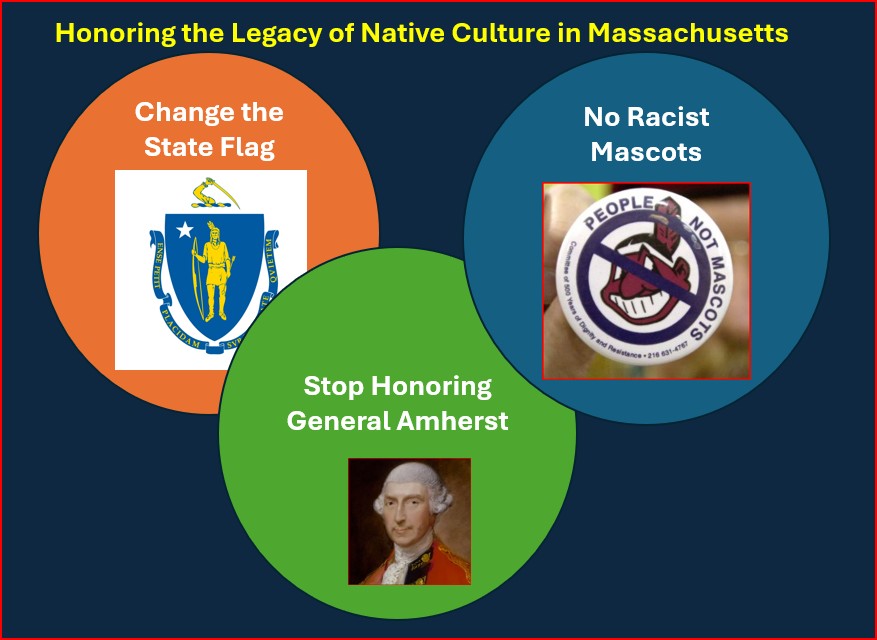
The suggestion to change the name of our congregation and remove the word “Amherst” was brought to the UUSA Board of Trustees in 2021 by the board co-president at that time. Inspired by this remark and further investigation, John Gerber wrote an editorial for the local independent press titled “Why is the Town of Amherst still called Amherst?

There was little public response.

Continue reading Efforts to “Lose the A from the UUSA”

My 2025 Sharing Garden is Open

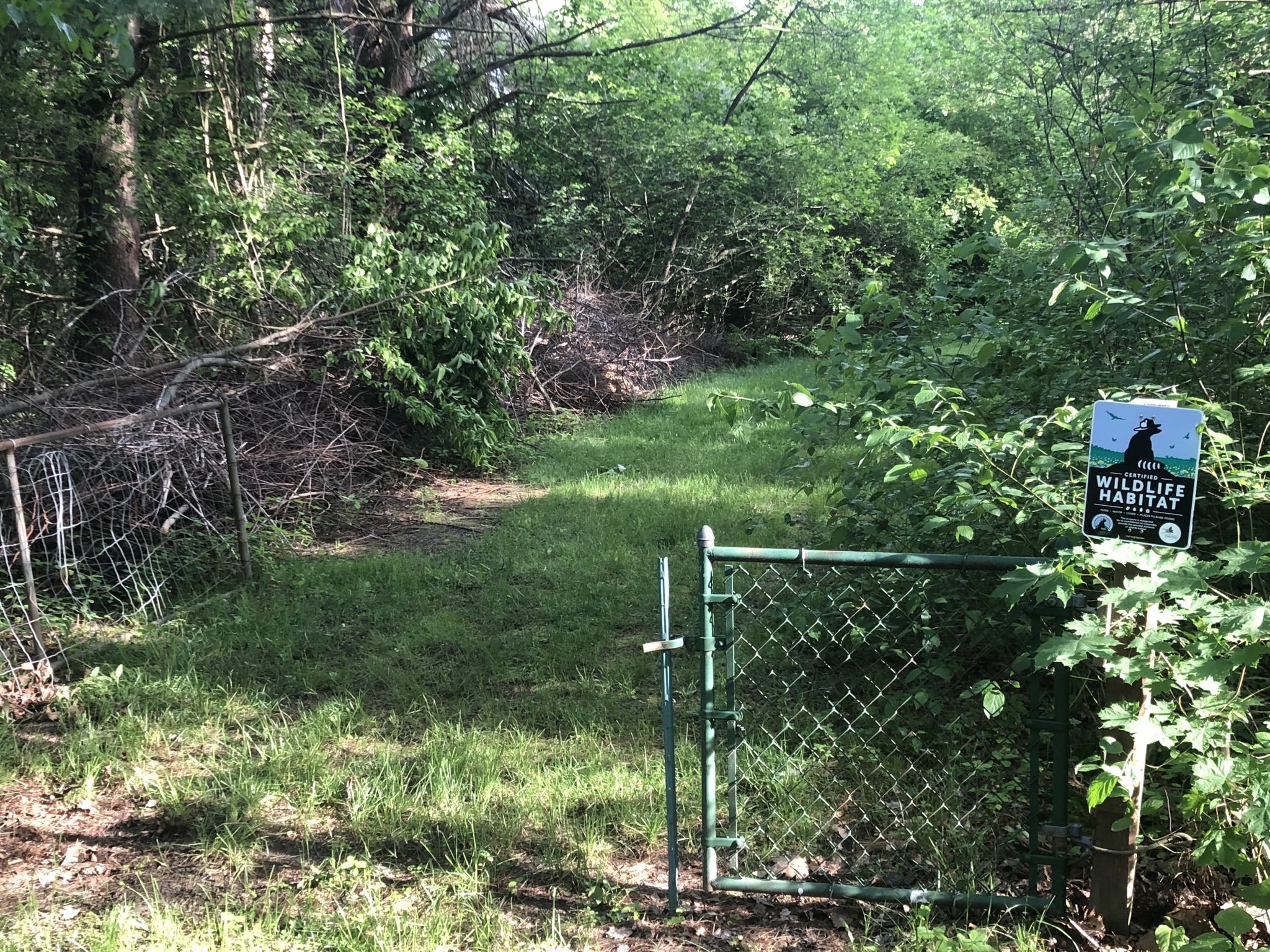
Friends and neighbors are welcome to enjoy my sharing garden again this year. The entrance is on Rolling Ridge Dr., next to the path between Harlow Dr. and Rolling Ridge and just across the street from the new flower farmstand at 151 Rolling Ridge. If you drive, you are welcome to pull into the gate that opens into my gardens.

You are welcome to stroll about, come and sit, and help yourself to any of the flowers, vegetables, or fruit you come across.

The entrance looks like this…..

The first edible plant you will see is the mulberry tree with two chairs underneath. I make mulberry muffins from these fruit when they begin to ripen and turn red.

Continue reading My 2025 Sharing Garden is Open

How did the town of Amherst come to be called “Amherst”?

Several people who responded to my 2022 post in the Amherst Indy titled  “Why is the Town of Amherst still called Amherst?” shared their personal opinions regarding my suggestion to change the name of the town. It struck me as interesting that some of the most strongly held opinions were based on “urban myths” that seem to be accepted as true. So I did a little digging and learned….

  1. In 1734, the east inhabitants of Hadley petitioned the General Court to create the third precinct of East Hadley (which is now Amherst), on the condition that a settled orthodox minister be named. Families from the surrounding towns began to occupy the new precinct.
  2. The April 3, 1758 Record of the Town Meeting of Hadley documented a request to appoint a committee to write a petition to the Massachusetts General Court (the governing body of the British Crown) which would change the precinct of East Hadley, to a district with a separate town government. No mention was made of a new name at that time.
  3. In June 1758, a petition was filed with the General Court requesting the representative of the British crown, Governor Pownall, create a new district to be called “Amherst.”
  4. The Governor approved the proposal on February 13, 1759.
  5. The first meeting of the new district of Amherst was held on March 19, 1759 at which time appointments were made for a treasurer, constable, surveyors and selectmen. They also approved highway work, money for a school, and a salary for the minister.
  6. The district was incorporated as a town in 1775, maintaining the name Amherst.

Continue reading How did the town of Amherst come to be called “Amherst”?

Coming Back to Life

Please cry with me….

I have been working with a group of active learners from around the world to apply the discipline of systems thinking to the climate crisis. This working group is sponsored by Common Earth and I recommend anyone who wants to struggle collectively to understand and develop an effective response to climate chaos to take one of their free classes.

One of the lessons that has emerged for me in this work is the reminder, once again, that “thinking alone is not enough” to address the problem of radical climate change.  Nor is anger, fear or blame particularly effective. And this awareness applies not only to climate, but many other of the problems we face, including the chaos created by the new U.S. president. Indeed, each morning for the past month or so, when I read the news and eat my granola, I let myself feel grief. 

Continue reading Coming Back to Life

Repentance and Repair continued….

I concluded my last post on repentance and repair with the suggestion to my Unitarian Universalist friends that “it is unlikely we will accountably dismantle racism and other oppressions in ourselves and our institutions (as it states in our own Eighth Principle) until we do the necessary repentance and repair work associated with America’s original sin.”  That sin, according to the Reverend Wallace in America’s Original Sin; Racism, White Privilege and the Bridge to a New America, was the result of white supremacy. This post attempts to go deeper into this idea and suggests that “acknowledged grief” is a necessary a step toward repentance and repair.

Continue reading Repentance and Repair continued….

Why do we continue to honor Jeffrey Amherst?

Who exactly was Jeffery Amherst? (Joshua Reynolds)

Lord Jeffrey Amherst might be considered the 18th century poster child for white supremacy culture, yet he is still honored today….

The first half of this blog was adapted from Jordan Gill · CBC News · Posted: Apr 29, 2017

As an initiative to change the name of Port-la-Joye–Fort Amherst National Historic Site on Prince Edwards Island in Canada. is being debated, a researcher weighs in on the history of Jeffery Amherst.

Mi’kmaq elders and the Mi’kmaq Confederacy of Prince Edwards Island, Canada, have raised questions about the honouring of Amherst, by naming sites after him — arguing he was not only an enemy of Indigenous people, but worse.

To say Amherst was a decorated military man would be an understatement. He was a Field Marshal in the British Army. He served during the Seven Years’ War in New France or modern day Nova Scotia. He also held the offices of Governor of Quebec as well as Crown Governor of Virginia and was named a Lord.

But scholars have long debated Amherst’s actions during his service, including allegations he advocated the use of biological warfare, through smallpox blankets, to kill Indigenous peoples.

See an example of a scholarly document here.

Continue reading Why do we continue to honor Jeffrey Amherst?

Our Sharing garden

There is a garden where you are welcome to come and sit, walk, meditate, pick blueberries when they are ready, cut flowers in season, and bring your kids to see the chickens…..

The entrance to the garden is through a gate between 132 and 158 Rolling Ridge Rd., right next to the walking path between Harlow and Rolling Ridge. This almost one acre garden produced vegetables, chickens and turkeys for my family for many years. Now that I am living alone, I would like to share the garden with neighbors.

Anytime the gate is open, you are welcome to come in and explore.

This garden is currently under development as I have done very little there for the past few years. I asked an ecological landscape designer to give me some advice and they produced a map as a guide to development, which will likely take several years.

I am not following the design exactly, but this gives you an idea of what it might be like someday.

This project is related to a study I did on our neighborhood last winter that may be seen here: https://changingthestory.net/2020/11/22/our-backyard/

If you would like to be on an email list to receive notice when something is ready to pick, please send me a note at jgerber@umass.edu.

Welcome to the sharing garden……

The Tree of Life

A symbol of re-birth

As the seasons change from summer, to autumn, to winter, and spring, trees change form, seemingly dying with the winter chill and being reborn in the spring. Much like the life cycle of trees, our lives can experience seasons of darkness and light, death and re-birth. The Tree of Life symbol represents re-birth, positive energy and new beginnings. I chose this symbol as a subject of meditation and prayer many years ago. Today, I carry a Tree of Life tattoo on my left arm. It also appears on my gravestone. Here is why….

A Connection to Everything in Space: The Tree of Life represents the interconnectedness of all things. It symbolizes connection and serves as a reminder that we are not alone. The roots of the Tree of Life dig deep into the earth, a manifestation of the material universe, and finds nourishment in a connection to the Earth Mother. The branches of the Tree of Life reach up into the sky, a manifestation of spirit. The branches hold up leaves to receive energy from the sun. The Tree of Life symbol reminds us of our place connected to everything in the Kosmos.   

A Connection to Everything in Time: The Tree of Life represents the connection to our human and more-than-human ancestors. The Tree of Life has an intricate network of branches that represent how a family grows and expands through many generations. This puts us in the context of a evolutionary process that extends back 13.8 billion years to the Big Bang.

===========================

The Tree of Life symbol is found in many cultures and traditions, I find inspiration particularly from two. They are:

The Kabbalah Tree of Life

The Celtic Tree of Life

These two and others are described here: Tree of Life.

Why so many epidemics originate in Asia and Africa – and why we can expect more

Author: Suresh V. Kuchipudi

Clinical Professor and Associate Director of Animal Diagnostic Laboratory, Penn State – March 4, 2020

The coronavirus disease, known as COVID-19, is a frightening reminder of the imminent global threat posed by emerging infectious diseases. Although epidemics have arisen during all of human history, they now seem to be on the rise. In just the past 20 years, coronaviruses alone have caused three major outbreaks worldwide. Even more troubling, the duration between these three pandemics has gotten shorter.

I am a virologist and associate director of the Animal Diagnostic Laboratory at Penn State University, and my laboratory studies zoonotic viruses, those that jump from animals and infect people. Most of the pandemics have at least one thing in common: They began their deadly work in Asia or Africa. The reasons why may surprise you.

Continue reading Why so many epidemics originate in Asia and Africa – and why we can expect more

To our Grandchildren

Shortly after Phyl died, I asked friends and family to send me a short video clip of themselves talking to our grandchildren about their GG. I made the following two videos from these clips. Thanks to everyone who contributed.

John Gerber

1.Family and friends from the “old days” tell GG’s grandchildren about their GG – 28 minutes

2. Remembering Phyl Part II – Amherst Friends – 45 minutes

In addition, there are two videos from Phyl’s Celebration of Life

3. Wildwood Celebration for Phyl – Part I

4. Wildwood Celebration for Phyl – Part II

And a few favorites

5. There is Love – 4 minutes

6. A Parade for Phyl and Sue – May 22, 2020

7. Three Years of Phyl in Four Minutes – 4 minutes

8. Phyl Goes to MIT – 3 minutes

9. Phyl at the Beach – 3 minutes

And finally…

10. Phyl’s story – 38 blog posts

This is what our mermaid is doing now……

Our mermaid