I believe a university education should prepare a student for both life and livelihood. My work is to create an educational environment in which students may acquire information, knowledge and wisdom toward this end. In addition to gaining basic subject matter knowledge, students in my courses are guided to clarify their core values, individually and collectively, and to examine their behavior in the context of these values. In this process students are challenged to discover their place as citizens of the world, by constructing a sense of self beyond the individual-self to include the family-self, community-self, and global-self. This approach seems to have made these courses attractive to many students who struggle to find personal meaning in their lives, their studies, and their intended careers.
How often are those of us at the public university told that science must be “value-free”….. that is objective and impartial? I disagree…..
Rather, I suggest that we need to clarify the values that drive our work and make them transparent to the public. In fact, the so-called “value-free” university must be more influenced by values, public values such as; truth over objectivity, public service over selfishness, scholarship over politics, and compassion over competition. This blog presents a set of values and a belief Continue reading A Declaration of Values – to guide our work as academics→
Many symbols of American culture have come out of Detroit, Michigan. Motown Records and classic American cars are some of the things that come to mind when someone mentions Detroit. However, since the collapse of the American auto industry and the economic decline that followed, the city is also known for its high crime rate, poverty and abandoned buildings. The city filed for nation’s largest municipal bankruptcy in 2013. Detroiters however, have not given up on their city and what has now become one of the largest urban agriculture initiatives in the United States is a testament to their determination and the power of local food.
Dr. Daniel S. Gerber, Associate Dean for Academic Affairs, School of Public Health and Health Sciences, University of Massachusetts, Amherst MA
At a recent visit to have dinner with my mentor and friend Dr. Jane Vella I said, “Dialogue Education has come to academia.” In my experience, Adult Learning Theory which includes Dialogue Education, has become the premier pedagogy in Higher Education. I asked, “Why else would UMass, Amherst recently build a new academic teaching building at the cost of one hundred and ten million dollars with mostly team-based learning classrooms?” These are classrooms, housed with ten to fifteen round tables and nine chairs at each table, where students work cooperatively – learning the material by problem-solving and participating in other student-centered active learning projects. At this point Karen Ridout, who came by Jane’s house to meet me, said, “Dan, would you be willing to write a blog about this?” I said “Sure”, thinking I have never written a blog before and I don’t have a clue as to the format. But, I am certainly willing to put my thoughts on paper.
One of the most exciting programs at the University of Massachusetts Amherst today is an undergraduate major with a tradition that goes back 150 years and yet still serves the citizens of the local region by growing food, growing community and “growing” new farmers.
As local and regional food production in New England grows, so does enrollment in the Stockbridge School of Agriculture’s Sustainable Food and Farming program. UMass graduates are engaged in creating ventures to relocalize the food system, build community, and reduce the carbon cost of shipping food long distances.
UMass began as the Massachusetts Agricultural College in 1863 and recently the former “Mass Aggie” was recognized as having the eighth best global agricultural science program and 3rd best in the U.S. Levi Stockbridge, Hadley farmer and the first teacher at Mass Aggie, would be proud.
Building on its historic mission of practical research, outreach to the community and hands-on education, today’s Stockbridge School helps educate young women and men in ecological landscape management and sustainable food systems — crucial training in an era threatened by the impact of radical climate change.
Many Stockbridge students and grads believe that global trends and the need for enhanced food security will make the Food Solutions New England vision of producing at least 50% of New England’s food by 2060 a realistic objective. Students and graduates both contribute to this goal by working toward careers in local food and farming, urban agriculture, permaculture, herbal medicine, community education and advocacy for a more sustainable and just world. Most “Stockies” choose to complement their classroom work with real world experience, often in the local community, earning academic credit for this work as part of their undergraduate studies.
An example of a local business providing students with valuable real world experience is the All Things Local Cooperative Market in downtown Amherst, started by area people committed to the relocalization vision. Stockbridge students and graduates volunteer at this year-round farmers’ market, some selling products they produced themselves, such as organic eggs, milk, artisan tea, blueberries, fermented kombucha, mushrooms and other vegetables.
Other Stockbridge students volunteer with Grow Food Amherst, a network of neighbors and students uniting town and gown. The vibrant local food economy of the Pioneer Valley provides a supportive environment for food entrepreneurs, and this project engages over 450 local residents helping to move the region towards greater food-resiliency through education and action.
Building on Levi Stockbridge’s commitment to experiential learning, students in the Sustainable Food and Farming major are actively engaged in hands-on learning projects that contribute both to their own education as well as the local community. For example:
The UMass Student Farm is a year-round class where students manage a small organic farm and sell their produce through food service and retail markets — including a popular on-campus farmers’ market.
The UMass Permaculture Initiative has converted underused grass lawns on campus into edible, low-maintenance food gardens, winning the White House Champions of Change competition in 2012.
The Student Food Advocacy group and the UMass Chancellor signed the Real Food Commitment, which ensures that by 2020, at least 20 percent of the food purchased for the dining halls will be local, organic, fair trade and/or animal-friendly.
The Massachusetts Renaissance Center Garden is a demonstration garden open to the public, featuring the herbs and vegetables grown during Shakespeare’s time.
The School Garden Project helps K-6 teachers at nearby elementary schools create vegetable and herb gardens as living classrooms.
The Food for All Garden at the new Undergraduate Agricultural Learning Center is a student-led project that grows food with the help of Amherst community members, and distributes the food through Not Bread Alone and the Amherst Survival Center.
Stockbridge students and alums are committed to building a more sustainable food system focused on environmental quality, social justice and economic vitality. These young visionaries imagine a world where the bulk of one’s food comes from local and regional farms, and production and marketing costs don’t exploit either people or the land. Stockies and thousands like them around the world need help from consumers who are committed to creating a more vibrant, peaceful and sustainable world. Americans on average spend less than 10% of our income on food. Many of us can afford to invest in our children’s future by spending a little more on local and regional food, and by doing so improve our personal heath, community health and the long term health of earth.
Dr. John M. Gerber is a professor in the University of Massachusetts Stockbridge School of Agriculture and founding member of Grow Food Amherst. You may find more essays and commentaries on his regular blog at World.edu. This article was adapted from the original which appeared in the In Close Proximity column of the Amherst Bulletin and was sponsored by the Pioneer Valley Relocalization Project.
Pope Francis has become something of a sustainability superhero today, finding his picture on the front covers of Rolling Stone, The New Yorker, and TIME magazine. He has been an outspoken critic of the dominance of the human desire for short term financial success at the expense of the other two sustainability goals of social justice and environmental quality. But I have to wonder if we are not expecting too much from just one man. If we are to realize positive change and a more sustainable world, this Pope needs our help.
The National Science Foundation has awarded 3 western Massachusetts higher education institutions a grant to create a collaborative program combining clean energy studies with sustainable agriculture. This project will help introduce students to new technologies and sustainable practices at Holyoke Community College (HCC), Hampshire College, and the University of Massachusetts Amherst.
The application of clean energy technology to sustainable agriculture is “a natural” for the Pioneer Valley of western Massachusetts, where several colleges and organizations are available to assist residents grow healthy food and promote a culture less dependent on fossil fuels. Concern about climate change and food security are driving these changes nationwide, but western Mass is a “hotspot” for this sort of work.
One of the unique features of this project is the collaboration among three higher education institutions. Holyoke Community College offers a unique 2-year Sustainability Studies program and maintains the highest transfer rate of community colleges in Massachusetts. Hampshire College was established to focus on interdisciplinary and self-directed learning, and is particularly strong in agriculture and the life sciences. And the University of Massachusetts Amherst is the state’s flagship land grant university, originally founded as Massachusetts Agricultural College. It is the home for the Stockbridge School of Agriculture Sustainable Food and Farming program.
In addition to three educational institutions, the project has a wide array of industry partners to draw upon, both in clean energy and agriculture. The local, sustainable food movement has taken solid root in the Pioneer Valley. Those involved in this movement are predisposed to know how important it is to reduce our reliance on fossil fuels. Over 220 farms are members of our regional Community Involved in Sustaining Agriculture (CISA) organization (which was initiated by a collaboration among Hampshire College, UMass, and several local non-profit organizations). Many of the CISA members are already utilizing clean energy in their agricultural enterprises and hire college graduates. Of these, 27 of local business have already joined the Advisory Board for the project.
The culture of agriculture is changing across the nation from large industrialized corporate farms to smaller, more ecologically friendly farms. Farming is developing as one of the most interesting career paths in New England, offering opportunities for young people to start their own business. Many of these new more sustainable farms are utilizing clean energy technologies in their farming practice. Their desire to be more sustainable includes using less fossil fuel, chemical fertilizers, herbicides and pesticides. Training future employees in the use of new clean energy technologies will create a viable workforce for these farm enterprises.
The NSF grant will help support a new multi-campus 6-week summer class that combines the strengths of existing programs at each of the three schools: clean energy at HCC; efficient heating and cooling technologies at the Hampshire College Farm Center focused on sustainable practices; and sustainable agriculture at UMass. This class will run from May 26 through July 2, 2015. Tuition is free for qualified students from the three colleges. This class is expected to create a pathway for those students who want to continue their studies in clean energy and sustainable agriculture to transfer easily from HCC to Hampshire College and UMass.
Another large portion of the grant will pay for new clean energy and agriculture equipment that will be used by students from all three schools, including a micro-farm greenhouse demonstration and training facility at the UMass Agricultural Learning Center. The micro-farm greenhouse demonstration and training facility will be managed by the UMass Student Farming Project, which grows vegetables for sale throughout the fall and winter. The new facility will give students an opportunity to practice and learn energy-efficient technologies while producing fresh, local vegetables for the campus community.
Other funds from the grant will be used by Hampshire College to construct a moveable greenhouse and mobile refrigeration unit, both of which will be solar-powered. Students will build the greenhouses and also convert an old diesel tractor to be powered by solar energy. HCC will be getting a solar-powered electric fence, composting and irrigation equipment for its sustainability and permaculture gardens and a small wind turbine.
Money from the grant will also be used to pay stipends to students who want to do summer internships with clean energy businesses or local farms. This project will allow students to gain practical experience while earning college credit and preparing for work in the emerging field of clean energy and sustainable agriculture.
——————————————————————————————————
A Class will be offered during the summer:
Clean Energy & Sustainable Agriculture
Holyoke Community College SUS 220 – 6 credits
May 26 – July 2, 2015
Monday to Wednesday from 9:00am – 1:00pm and Thursdays from 9:00am – 3:00pm
Clean energy is becoming a priority as our global community faces the challenge of climate change. At the same time agriculture is changing to meet the needs of a more environmentally aware consuming public. In this intercollegiate and collaborative course students will learn how to apply clean energy technologies to sustainable agriculture practices. This class brings together students at Holyoke Community College, Hampshire College and the University of Massachusetts Amherst to learn a variety of emerging technologies. Topics will include solar, wind and geothermal technologies, ecological farming, greenhouse management, rainwater collection, root zone heating and considerations of social justice.
From time to time, questions are raised about the value of classes which offer students the opportunity to engage in “professional practice” within a university curriculum. Some science faculty recognize the value of experiential learning but question the worth of any experience that is done outside of a science laboratory.
The United States WILL NOT join 73 other countries to support a price on carbon.
Brazil WILL NOT sign a pledge to halt deforestation by 2030.
China WILL NOT agree to President Obama’s declaration that “nobody gets a pass” and insists that developing nations be treated differently
The rhetoric coming out of the historic meeting of nations following massive rallies by climate supporters in NY and around the world was indeed inspiring.
“Today we must set the world on a new course” according to United Nations Secretary-General Ban Ki-Moon.
President Obama proclaimed “Today I call on all countries to join us, not next year or the year after that, but right now. Because no nation can meet this global threat alone.” Continue reading Climate Change News from New York→
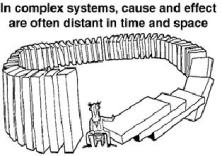
I’m gearing up to teach my favorite class again this fall at UMass, Agricultural Systems Thinking, in which we learn how to think about the many problems created by modern industrial agriculture. This post is written for the students who will join me in what I consider to be an exciting exploration into a toolbox for thinkers that might just “save the world.”
Let me explain….
First, the class is called “agricultural” systems thinking simply because I get paid to think about food and farming stuff by the UMass Stockbridge School of Agriculture. The systems thinking tools I teach can be used to better understand any complex system. Although it is critical to advancing our sustainability agenda, classes in systems thinking are missing from most university programs today.

 I believe a university education should prepare a student for both life and livelihood. My work is to create an educational environment in which students may acquire information, knowledge and wisdom toward this end. In addition to gaining basic subject matter knowledge, students in my courses are guided to clarify their core values, individually and collectively, and to examine their behavior in the context of these values. In this process students are challenged to discover their place as citizens of the world, by constructing a sense of self beyond the individual-self to include the family-self, community-self, and global-self. This approach seems to have made these courses attractive to many students who struggle to find personal meaning in their lives, their studies, and their intended careers.

 Pope Francis has become something of a sustainability superhero today, finding his picture on the front covers of Rolling Stone, The New Yorker, and TIME magazine. He has been an outspoken critic of the dominance of the human desire for short term financial success at the expense of the other two sustainability goals of social justice and environmental quality. But I have to wonder if we are not expecting too much from just one man. If we are to realize positive change and a more sustainable world, this Pope needs our help.


 I’m gearing up to teach my favorite class again this fall at UMass,
  Changing the Story