
Several people who responded to my 2022 post in the Amherst Indy titled “Why is the Town of Amherst still called Amherst?” shared their personal opinions regarding my suggestion to change the name of the town. It struck me as interesting that some of the most strongly held opinions were based on “urban myths” that seem to be accepted as true. So I did a little digging and learned….
- In 1734, the east inhabitants of Hadley petitioned the General Court to create the third precinct of East Hadley (which is now Amherst), on the condition that a settled orthodox minister be named. Families from the surrounding towns began to occupy the new precinct.
- The April 3, 1758 Record of the Town Meeting of Hadley documented a request to appoint a committee to write a petition to the Massachusetts General Court (the governing body of the British Crown) which would change the precinct of East Hadley, to a district with a separate town government. No mention was made of a new name at that time.
- In June 1758, a petition was filed with the General Court requesting the representative of the British crown, Governor Pownall, create a new district to be called “Amherst.”
- The Governor approved the proposal on February 13, 1759.
- The first meeting of the new district of Amherst was held on March 19, 1759 at which time appointments were made for a treasurer, constable, surveyors and selectmen. They also approved highway work, money for a school, and a salary for the minister.
- The district was incorporated as a town in 1775, maintaining the name Amherst.
It is hard to know for sure why the name “Amherst” was chosen for the new district as the historical record is sparse. We know that a petition was filed with Governor Thomas Pownall. In this letter, three leaders of the district, John Nash, Isaac Ward, and Nehemiah Dickinson, make a lengthy case that the new district NOT be named Norwottuck, as was proposed by leaders of the rival town of Northampton.
There was a story that “the name ‘Norwottuck’ was written in, and afterwards erased by Governor Pownall and ‘Amherst’ was substituted. However, there is no documentary evidence that this story is true. The petition however is an interesting document (although the date of this document was wrong and changed later).
So what was happening in New England at the time that led the petitioners and the governor to choose the name Amherst?
When the petition was filed in June 1758, Field Marshall Baron Amherst was being widely praised as a hero for defeating the French at the Siege of Louisbourg. We can imagine that the leading business leaders of East Hadley might want to ride the wave of excitement and praise for the new leader of British armed forces in New England. In addition, it was known that Amherst was an intimate friend Governor Pownall. It was a common practice of the time for the governor of British colonies to name new districts. So “Amherst” it was!
What do we know about General Amherst?
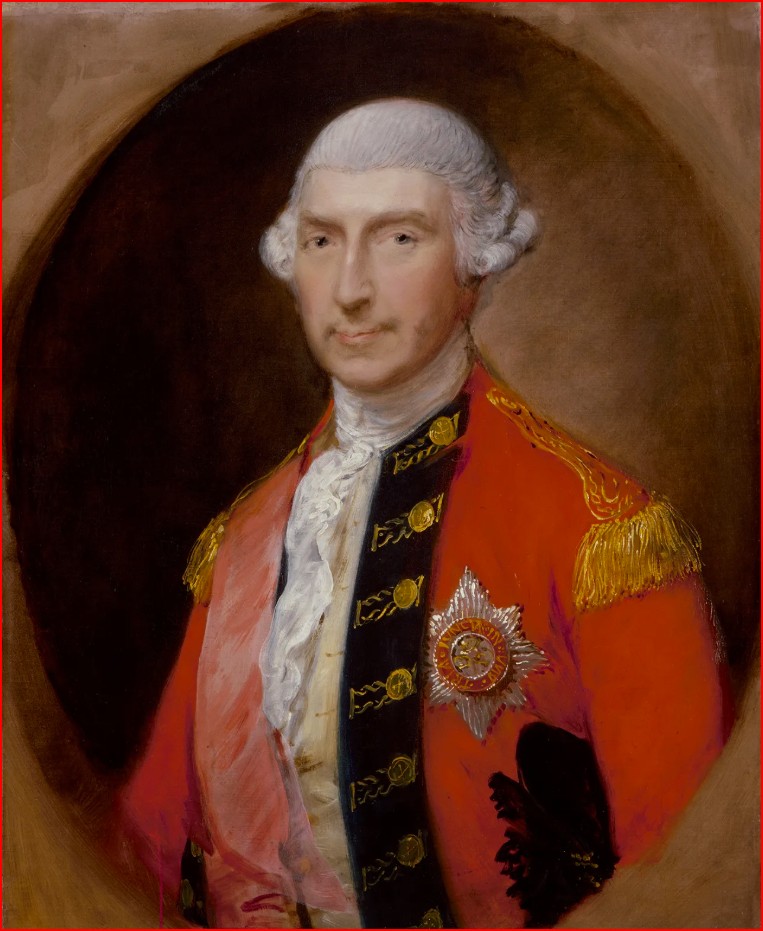
Amherst served during the Seven Years’ War in both Europe and North America. He was a Field Marshal and commander in chief of the British Military Forces in North America and praised for his victory over the French in Louisbourgh . He directed the British forces that took control of the forts at Ticonderoga, Niagara, and Quebec, and in 1760 brought about the collapse of New France by capturing Montreal. This led to the end of French territorial claims in North America, and the creation of the new British territory which is now Canada.
Despite his wartime victories, General Amherst’s unwillingness to provision Indians in the Ohio Valley and Great Lakes region who were being displaced by English settlers, helped provoke Chief Pontiac’s Uprising in 1763. It had been a practice of the French to offer food to Native tribes who were gradually being displaced from their homes by European settlers. Amherst’s intransigence in dealing with Native leaders and general disdain for Native peoples resulted in the Delawares, the Shawnees, the Senecas, the Mingoes, the Mohicans, the Miamis, the Ottawas and the Wyandots banding together in an effort to drive the British out of their territory. During Pontiac’s War, under Odawa chief Obwandiyag (Pontiac), this loose coalition of Indigenous nations revolted against British rule.
Amherst was encouraged by King George to quell the revolt and he chose to employ rangers, vigilante bands of settlers to kill men, women and children of the Indigenous population. He also encouraged regular militia and rangers to burn the crops of the Natives. And today, he is well known for his support of biological warfare. In July 1763, Amherst wrote to Colonial Henry Bouquet, in charge of the British army in Fort Pitt (near today’s Pittsburgh)… “Could it not be contrived to Send the Small Pox among those Disaffected Tribes of Indians? We must, on this occasion, Use Every Stratagem in our power to Reduce them.”
Colonial Henry Bouquet replied to General Amherst… “I will try to inocculate [sic] the Indians by means of Blankets that may fall in their hands, taking care however not to get the disease myself. As it is pity to oppose good men against them, I wish we could make use of the Spaniard’s Method, and hunt them with English Dogs…”
In another 1763 letter, Lord Amherst wrote; “You will do well to try to inoculate the Indians by means of blankets, as well as to try every other method that can serve to extirpate this execrable race.” During this critical period of British expansion. settler colonialism shifted from occupation and displacement of Native peoples to genocide under Amherst’s leadership.
However, King George wanted to see an end to the expensive Indian wars and Amherst was recalled to England and replaced as commander in chief of the colonies, largely due to his mismanagement of the relationship with Native peoples in the Ohio Valley. Amherst’s replacement, General Thomas Gage, provided food and negotiated treaties with the Native tribes, taking a more conciliatory approach than his more aggressive predecessor. By this time, the town of Amherst had its name, although General Amherst was no longer a revered hero in the eyes of many.
Nevertheless, members of the British aristocracy took care of their own and Amherst was rewarded upon return to England as he seemed to be a great favorite of King George III. In 1770 he was appointed governor of Guernsey, in 1772 he became a member of the king’s Privy Council, in 1776 he was named baron Amherst by George III, and in 1796 he was given the rank of field marshal. His family was a recognized member of the British elite class and his nephew, William, was appointed as Governor General of India in the 1820’s. It is interesting that the town named after his nephew, Port Amherst on the coast of Burma, had its name changed to distance itself from its colonial past when when Burma became Myanmar.
Lord Amherst died on August 3, 1797, at his estate in Kent County, England, and was buried in the family vault at Sevenoaks. Amherst’s disdainful attitude toward indigenous peoples of North America was representative of most of the British aristocracy at the time. White supremacy was the organizing principle for the relationship between British imperialists and indigenous peoples throughout most of the British empire. The name “Amherst” is symbolic of British imperialism and white supremacy.
This history is being studied by the Indigenous Awareness Circle of the Unitarian Universalist Society of Amherst, which is exploring a recommendation to “lose the A from the UUSA” and dissociate the congregation from the namesake of the town and the congregation.
Sources
Carpenter, Edward W. and Charles F. Morehouse. 1896. The History of the Town of Amherst, Massachusetts.
Greene, Theodore P. 1978. Essays on Amherst’s History. The Vista Trust.
Hitchcock, Frederick H. 1891. The Handbook of Amherst; edited and re-released by Richard Panchyk in 2007. History Press.
Rand, Frank P. 1958. The Village of Amherst: a Landmark of Light. Amherst Historical Society.
Related Resources
- Reinterpreting New England Indians and the Colonial Experience
- Amherst before 1759: Indian Deeds of Land
- Changing Nature of Indian Slavery in New England
- Jeffrey Amherst and the Smallpox Blankets.
- Amherst before 1759: a Glimpse of Early Amherst
- Amherst before 1759: Amherst becomes a District in 1759
- Puffers Pond and Native Trails
- Tracing Indigenous Lives in and around Amherst College
- Historic Northampton: Native Peoples I
- Historic Northampton: Native Peoples II
- Amherst History Connected by Water
- Emily Dickinson’s Perspective on Native peoples
- Revisiting Pocumtuck History in Deerfield: George Sheldon’s Vanishing Indian Act
- Decolonizing Educational Resources
 Changing the Story