
Please cry with me….
I have been working with a group of active learners from around the world to apply the discipline of systems thinking to the climate crisis. This working group is sponsored by Common Earth and I recommend anyone who wants to struggle collectively to understand and develop an effective response to climate chaos to take one of their free classes.
One of the lessons that has emerged for me in this work is the reminder, once again, that “thinking alone is not enough” to address the problem of radical climate change. Nor is anger, fear or blame particularly effective. And this awareness applies not only to climate, but many other of the problems we face, including the chaos created by the new U.S. president. Indeed, each morning for the past month or so, when I read the news and eat my granola, I let myself feel grief.
My acceptance of grief as a necessary first step in healing has been influenced by several powerful voices which I’ll share here, reinforced by my own experience. The first voice I’ll share is Sherri Mitchell, the author of Sacred Instructions: Indigenous Wisdom for Living Spirit-Based Change, who writes “…my group, Native Americans, have suffered an unrecognized holocaust in this country. The brutal genocide of Native peoples is hard to acknowledge for many, especially for those who have inherited some value from the loss and destruction that occurred here.” This truth has been largely ignored for the past 400 years by those of us of European descent. Mitchell and others point out that the unhealed grief of “America’s original sin” affects how we interact with each other today.
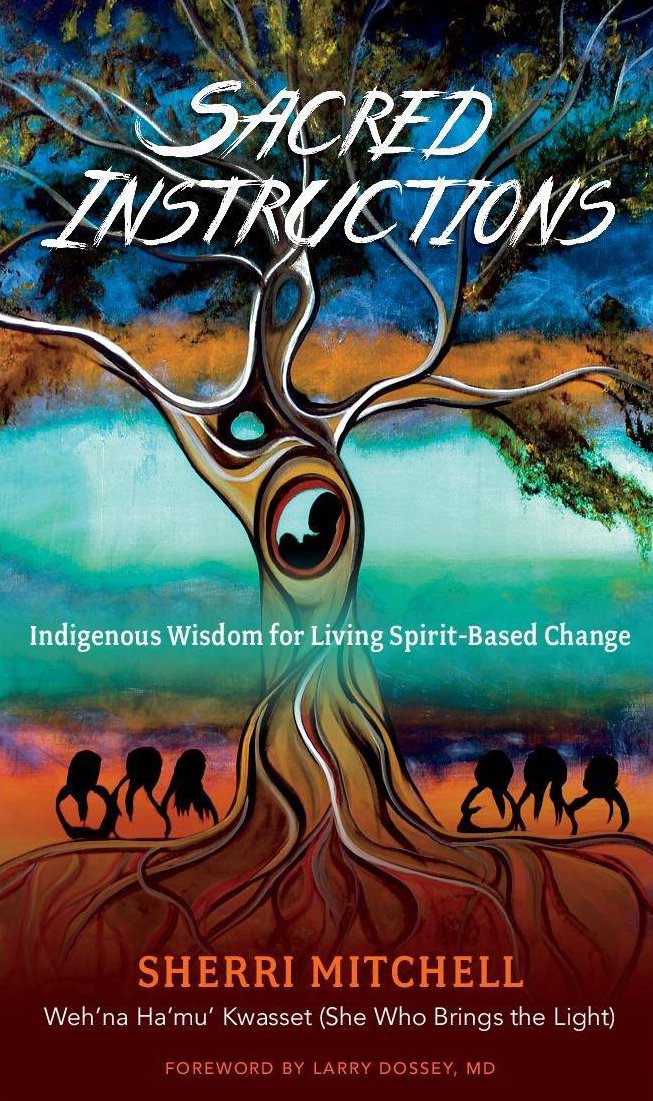
She explains… “we are all carrying grief, a deep unimaginable grief that impacts how we receive and connect with one another. It is a cumulative emotional and spiritual wound that results from the history of violence that we all share.” Mitchell believes that this history of violence is carried forward by the descendants of both the oppressed populations and the dominant oppressor population. She writes that trauma is carried forth from one generation to the next, appearing among the dominant oppressor population as the continuation of oppressive power structures. And the result is yet more fear, anger, and blame by both the oppressor and the oppressed.
Anger and blame however, can’t solve deeply rooted systemic problems, because these common human feelings divide us into opposing groups. On the other hand, honest grief can result in connections among people, even people who disagree with each other. The bad/good news is that everyone gets to experience grief at some time in their lives and sharing this grief may not only help heal individuals but entire societies.
The second voice I’ll share is from Martin Prechtel, who wrote in his book The Smell of Rain on Dust: Grief and Praise, “…only nations capable of the true art of grief, grieving their mistakes and the deeply felt losses they have endured or caused to happen, can say that they are not pools of emotional stagnation dressed up in the spoils of ungrieved wars disguised as good business.”. Prechtel contends that the root cause of continuous warfare is unhealed grief. He writes “what this means on the level of human society is when the sorrows of war’s losses go ungrieved, we are guaranteed the coming of another war.” Grief is necessary before healing, repentance, and repair can begin.

Many of us who have experienced a deep personal loss understand the value of active grieving. If we try to avoid, bury, or ignore the pain of loss, there is no healing. When the love of my life died after a 50-year relationship, sharing my pain with family and community was difficult but necessary to my own healing. A friend describes the process of grief as being “cracked open” so we are able to experience more of life. Joanna Macy and Molly Brown remind us in their book Coming Back to Life “…the heart that breaks open can hold the whole universe.” More connections.
My own “cracked open” heart has become “softer” and more likely to experience empathy and compassion for others in pain since my wife died. On a personal level, the process of “coming back to life” after her death has been one of both sadness and celebration, or in Martin Prechtel’s words grief and praise. The searing pain immediately following her loss has been metabolized over time into a dull ache and tender memories. On a societal level, Prechtel teaches that the process of grieving following war helps both the victor and the vanquished metabolize the pain, loss, and confusion of the conflict.
Prechtel states that grief and praise are not only natural but necessary to a balanced life and a healthy society. He suggests that the wild, painful expression of shared sorrow in the form of tears, song, and stories are a required element of the healing process for individuals and nations. This was surely my experience as I had to say goodbye to the one person I knew I could never live without.
Returning to the theme of climate crisis, I wonder if “shared grief and praise” needs more attention. Endless debates, conferences, scientific reports and news stories of climate-related disasters don’t seem to be working. Nor has education made much difference. I learned about “global warming” in a college class about 50 years ago and have been teaching college students about climate change for over 20 years. We are still not taking the threat of climate chaos seriously. Perhaps first we need to acknowledge the pain experienced by displaced peoples, disappearing species, and the loss of a living soil.
Prechtel’s call for an “expression of shared sorrow” remind me of the stories and songs shared by Dr. Lyla June, a Native American artist and scholar. Dr. June is a leader in helping us think about a heart-felt, community-based and scientific response to the climate crisis. In spite of, or perhaps because of their experience, Native peoples can be a source of wisdom on how to respond to injury and oppression, including the harm humans have done to the more-than-human world.
Lyla June advocates for holistic land management techniques that are practical and effective. But she begins with prayer and ceremony to help begin to heal the wounds. Lyla June sings in Time Traveler… “we are here to give all our love to the ones unborn.”
Before we can work effectively to negotiate international agreements to address the urgency of the climate crisis, perhaps we should grieve together, with each other and the earth, in an expression of shared sorrow. Perhaps we need more funerals in memory of all that has been lost to carelessness, ignorance and greed. Perhaps we need more “tears, song and stories”.
Then perhaps we’ll be ready to get to work…, together…, to heal ourselves, our communities, and the planet. Perhaps then we’ll be ready to “commit our love and our lives to the ones unborn“. In this way, maybe the earth including humans will have a chance of coming back to life.
 Changing the Story